
Learning how to organize a small apartment starts with three priorities: keep walking paths clear, place daily-use items close to where you use them, and limit belongings to what the available storage can reasonably hold. Organizers come later. First, decide what each part of the apartment needs to do and how much space you can give it.
This room-by-room system helps you make those decisions without turning organization into a constant reshuffling project. It works whether you have a compact studio or a small apartment with separate rooms.
Before organizing, audit the apartment you actually have
A useful system reflects your space, routine, and lease. Spend a few days noticing where clutter accumulates before moving everything into bins.
Protect walking paths and access points
Start with the routes you use every day. Walk from the entrance to the kitchen, bathroom, bed, closet, and main seating area. Notice where shoes, bags, laundry, furniture, or storage containers narrow those routes.
Keep these areas unobstructed:
- Entry and exit paths
- Interior door swings
- Closet and cabinet doors
- Windows used for ventilation or emergency access
- Heating and cooling vents
- Smoke and carbon monoxide detectors
- Electrical panels, outlets, plumbing shutoffs, and appliance connections
Floor space is not automatically storage space. A basket that forces you to step sideways every morning is poorly placed even if it technically fits.
Map daily-use zones
Think in activities instead of rooms. A studio may contain a sleeping zone, work zone, dressing zone, eating zone, and entry zone within one open space.
For each zone, list what you use there every day or several times a week. Keep those items within easy reach. Items used monthly can go higher, lower, or farther away. Seasonal belongings can occupy the least convenient storage, provided they remain safely accessible.
A simple placement order is:
- Daily items at waist, chest, or eye level.
- Weekly items in drawers, lower shelves, or nearby cabinets.
- Occasional items on high shelves or in under-bed storage.
- Seasonal items in the hardest practical locations.
This prevents a common small-space problem: prime storage filled with rarely used belongings while everyday items remain on the counter.
Measure realistic storage capacity
Measure the width, depth, and height of shelves, drawers, gaps, and under-furniture areas. Also measure the opening. A storage box may fit inside a cabinet but still be impossible to angle through its door.
Record obstacles such as hinges, pipes, baseboards, outlets, and door trim. For rolling carts and pullout containers, include the clearance needed to move them. For over-door storage, measure the door thickness, top gap, trim clearance, and space behind the open door.
Then set a capacity limit. If folded sweaters fill one dresser drawer without being compressed, that drawer is the sweater limit. Buying another container does not resolve the mismatch unless there is an appropriate place to put it.
How to organize a small apartment room by room
Work through one defined area at a time. Emptying the whole apartment at once creates piles that block normal life and make decisions harder. Finish one drawer, cabinet, wall, or furniture zone before starting another.
Entryway: build a landing zone without blocking the door
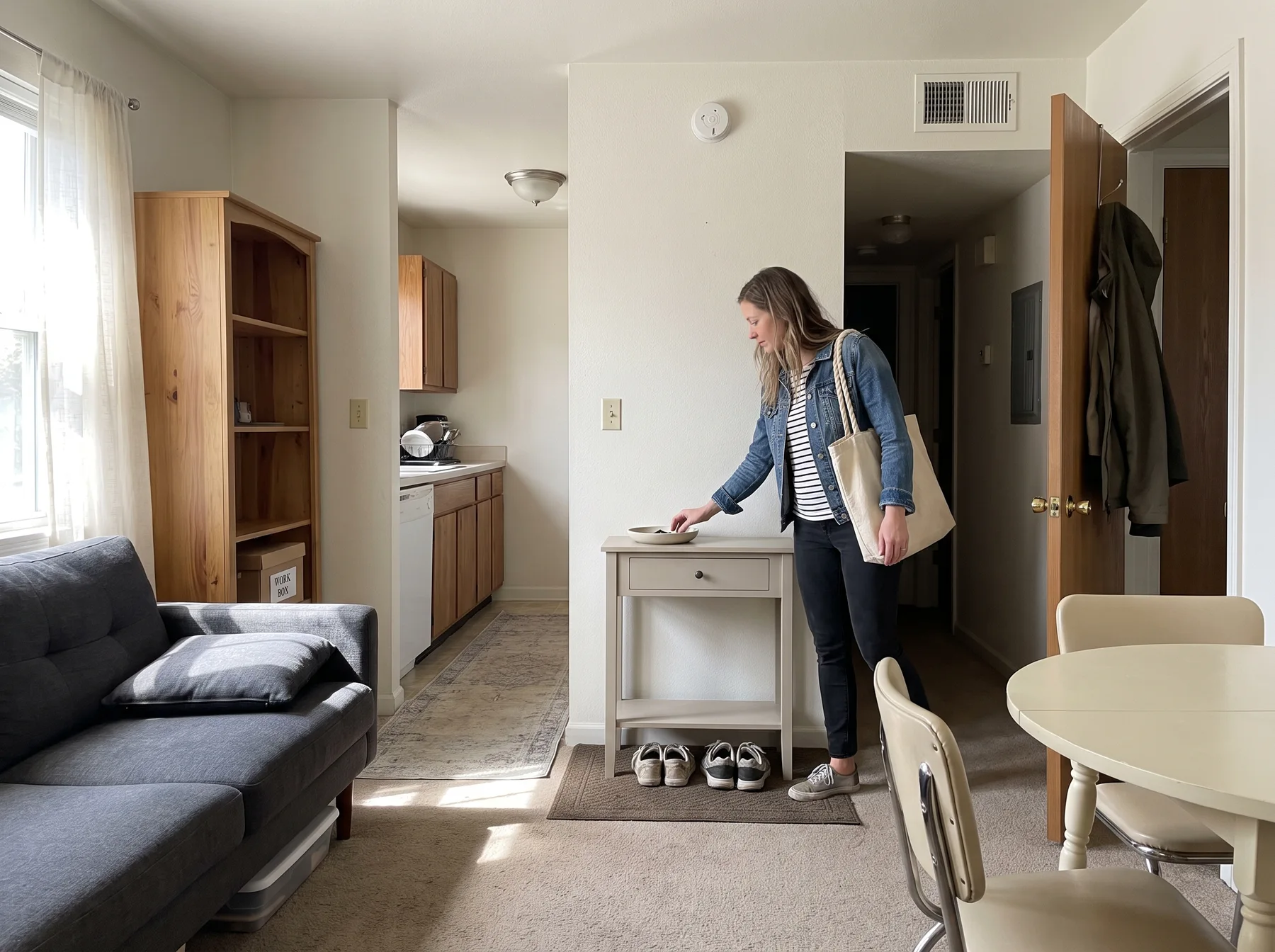
A small entry needs to handle the belongings that enter and leave with you. Usually that means keys, a bag, shoes, a coat, and current mail. It does not need to store every jacket or pair of shoes you own.
Assign one contained home to each daily category:
- A shallow tray or wall pocket for keys and outgoing items
- One hook per frequently used bag or coat
- A small shoe mat or narrow rack for current footwear
- A recycling or filing destination for mail beyond the entry
Move extra coats and off-season shoes to the main closet or another secondary storage area. If your front door opens directly into the living room, define a landing zone using the side of a bookcase, a narrow wall shelf, or one end of a console. The guide to apartment entryway organization when you have no entryway offers more placement options for this layout.
Test the finished setup by opening the door fully and walking inside while carrying a bag. Nothing should require you to squeeze past furniture or step over shoes.
Kitchen: organize around cooking and cleanup
Kitchen storage works best when items sit near the task they support. Keep knives, cutting boards, and mixing tools near the main preparation surface. Store pots near the range if the cabinets allow it. Keep food-storage containers near the surface where you pack leftovers.
Reserve the easiest shelves for foods and tools used each week. Put duplicate utensils, special occasion dishes, and rarely used appliances in less convenient locations. If an appliance never earns counter space and is too awkward to retrieve from a cabinet, consider whether it deserves space in the apartment.
Avoid buying matching containers as a first step. Original packaging often uses space efficiently and keeps cooking instructions, expiration dates, and allergen information attached. Shelf risers, turntables, and bins are useful only when they solve a specific access problem.
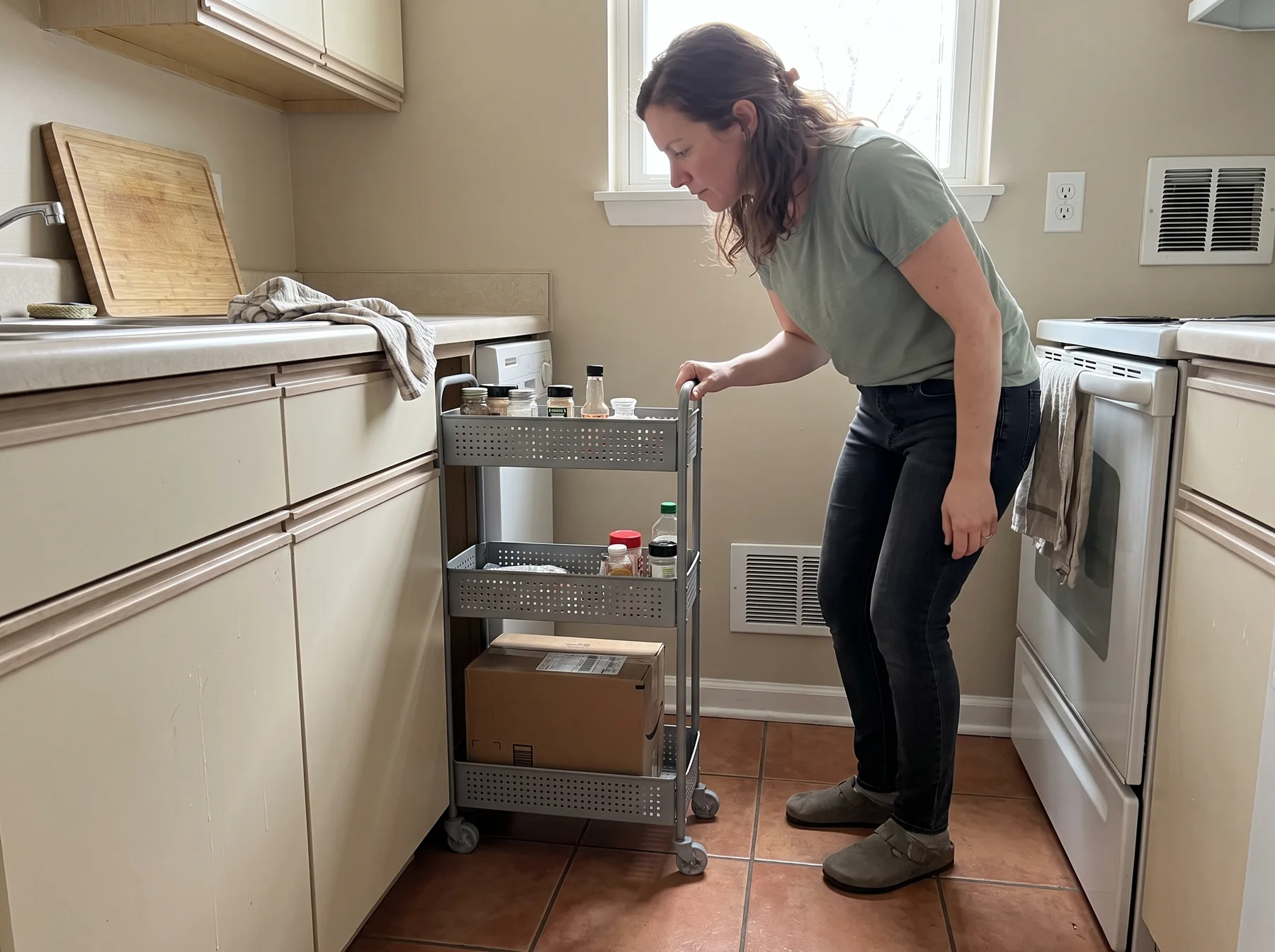
A narrow gap can hold small supplies if it remains safely accessible. A cart such as the Pipishell slim four-tier rolling storage cart is listed at approximately 7.1 inches wide and has perforated shelves. Measure the full gap and rolling clearance first. Keep heavier items low, follow the listing’s load guidance, and do not block walkways, ventilation, outlets, plumbing, or appliance service access.
Living room: give shared space clear jobs
In a compact apartment, the living room may also serve as an office, dining room, workout area, or guest space. The goal is not to hide every sign of those activities. It is to make transitions quick enough that one activity does not permanently displace the others.
Create a small reset kit for each secondary use. Work supplies might fit in one drawer, lidded box, or rolling file that moves beside the table. Exercise equipment might occupy one basket near the open floor area where it is used. Guest bedding can go in a labeled under-bed container rather than filling the main seating area.
Choose furniture based on both function and clearance. A storage ottoman is helpful if it stores something you need and still leaves a comfortable walking path. It is not helpful if its size makes the room difficult to cross.
Use open shelving selectively. Open shelves make frequently used objects easy to reach, but they also expose every category to view. Closed cabinets or matching opaque boxes can reduce visual clutter, while a few open sections keep daily items convenient.
Bedroom: protect sleep space and simplify clothing
Start by keeping the bed accessible from the side or sides you normally use. Avoid allowing laundry baskets, storage tubs, or temporary piles to take over that path.
Divide clothing storage by use:
- Current-season clothing in the easiest drawers and hanging areas
- Off-season clothing on high shelves or under the bed
- Laundry in one hamper located where clothes are usually removed
- Wear-again clothing in a defined place separate from clean clothes and laundry
The last category often causes chair piles. A small set of hooks, a short rail, or one designated shelf can contain it. Use the small-bedroom wear-again clothing system to choose a setup that fits your dressing routine.
Under-bed storage is best for categories that can tolerate less convenient access. Measure the lowest point under the frame, not only the height at the edge. Check for center supports, uneven flooring, and enough pullout room. Soft zippered bags can work around supports, while rigid boxes protect items better but need more exact clearance.
If a closet is crowded, organize the hanging rod and shelves before adding freestanding furniture. Group clothing by type, remove empty hangers, and keep the floor clear enough to reach the full closet. Shelf dividers can stabilize folded stacks, but compressed hanging rods and overfilled bins usually signal a capacity problem rather than a missing organizer.
Bathroom: use vertical space without creating damp clutter
Keep daily toiletries within reach and move backups, travel products, and occasional grooming tools out of the most accessible spots. Group small items by task so you can lift out one container instead of searching through a crowded cabinet.
Check under-sink storage for pipes, shutoff valves, and signs of leaks. Use short, removable bins that leave plumbing visible and accessible. Do not pack products tightly around pipes or store moisture-sensitive supplies where a leak could damage them.
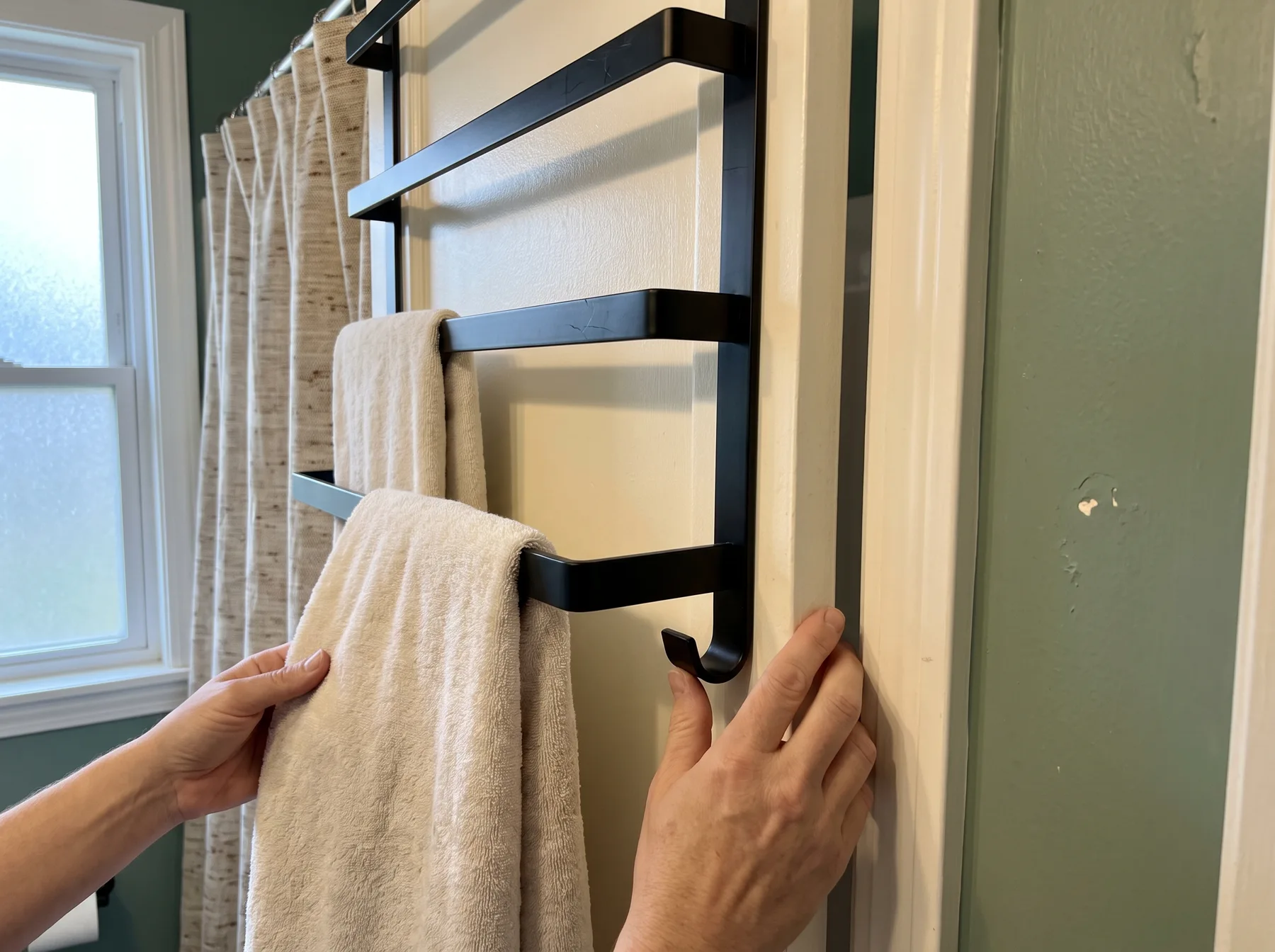
Doors can provide towel storage when wall space is limited, but only if the rack clears the frame and adjacent wall. The FLE three-tier over-the-door towel rack is described as black 304 stainless steel with three spaced bars and two hooks. Its listed dimensions are approximately 24 by 16.7 inches, and the door hook fits doors up to 1.77 inches thick. Before ordering, measure the door thickness, top gap, wall clearance, and how far hanging towels will project. Confirm that the door can still close and open fully.
Store bulk paper goods outside the bathroom if necessary. A bedroom shelf, hall cabinet, or labeled container can hold backups, while the bathroom keeps only the current supply.
Work area: contain the job, not just the supplies
A small apartment office needs a defined work surface, access to power, and a place for active papers. Start by removing household items that migrated onto the desk. Then separate active work from archives and general office supplies.
Keep only current projects within arm’s reach. File completed paperwork elsewhere, and limit spare notebooks, cables, and stationery to one assigned drawer or container. Label charging cables by device if several look alike.
Protect airflow around electronics and power equipment. Do not cover power strips, overload outlets, run cords through doorways, or place papers against heat-producing equipment. Use manufacturer instructions when arranging monitors, chargers, and other devices.
When the dining table doubles as a desk, use a portable work container sized to hold the items required for a normal session. At the end of the day, return those items to the container and move it to its assigned shelf. This makes clearing the table a short reset instead of a sorting project.
Laundry and cleaning supplies: store by the point of use
Keep laundry products near the washer only if they fit without crowding controls, vents, hookups, or access needed for maintenance. Otherwise, use a nearby cabinet or shelf. Heavy detergent is safer and easier to handle on a low or middle shelf than overhead.
Cleaning supplies do not all need to live together. Keep kitchen cleaners in a child-safe location near the kitchen and bathroom cleaners near the bathroom if that reduces the effort required to use them. Follow label storage instructions, keep products in their original containers, and never mix cleaning chemicals.
Long-handled tools and vacuums need an exact parking place. Measure the appliance in its stored configuration, including the hose, handle, charging base, and cord. Avoid leaning it where it can fall or block a door.
Choose organizers only after assigning the contents
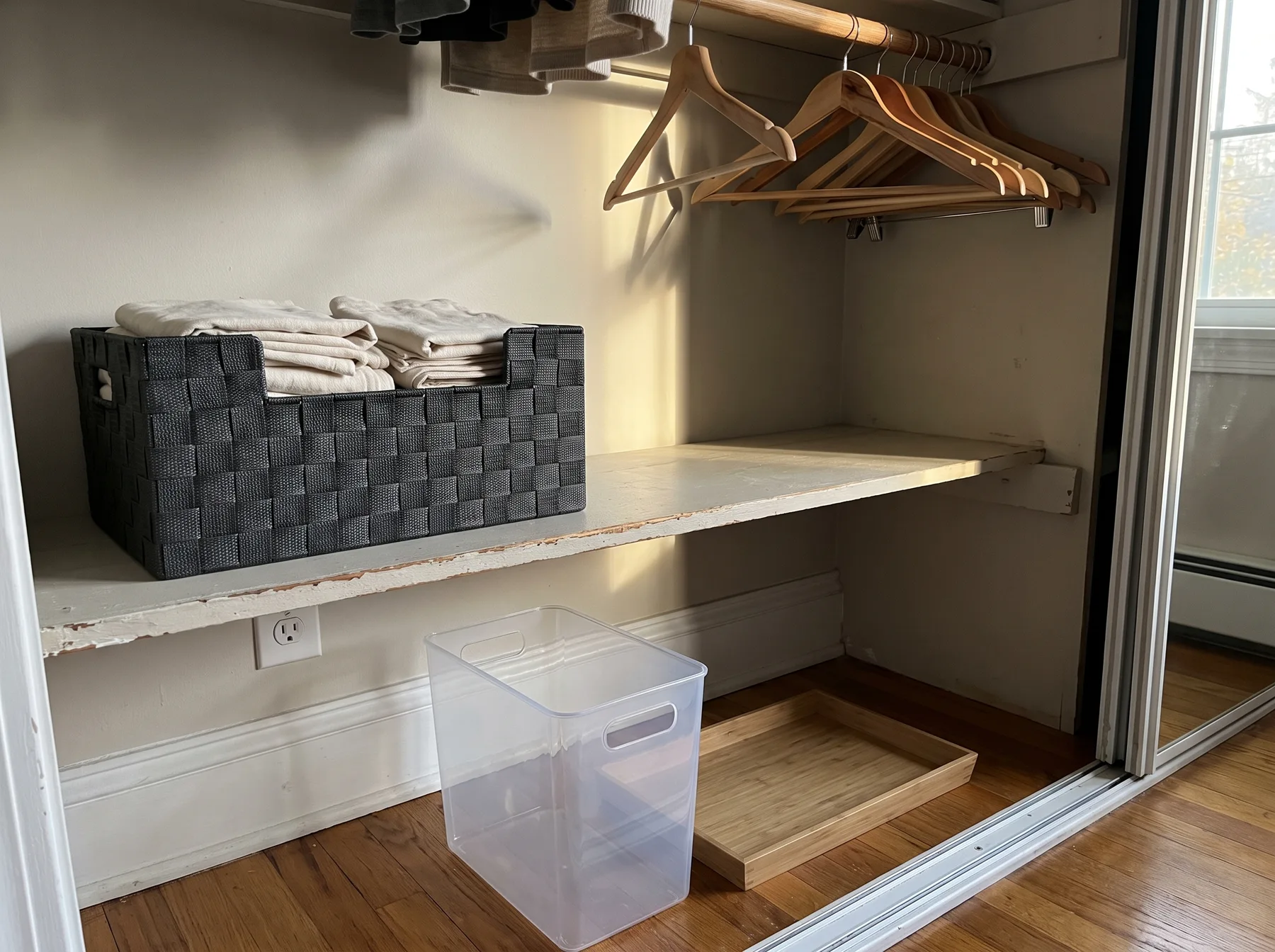
Once every category has a location, identify the access problem within that location. Then choose the simplest organizer that solves it.
| Storage problem | Practical option | Limitation to check | |---|---|---| | Deep shelf hides items | Pullout bin or turntable | Requires enough room to remove or rotate | | Tall cabinet wastes vertical space | Shelf riser | Must not make stacks unstable | | Narrow unused gap | Slim rolling cart | Needs width and pullout clearance | | Small loose objects spread out | Shallow divided tray | Dividers must match item sizes | | Seasonal textiles take closet space | Under-bed bag or box | Needs height and pullout clearance | | Towels lack a home | Hooks, rack, or over-door storage | Check door fit, projection, and lease rules |
Measure both the organizer and the items it will hold. A narrow bin can waste space if bottles do not fit upright. A deep basket can make small objects harder to find. Clear containers improve visibility, while opaque containers reduce visual noise. Neither is universally better.
Common mistakes that make organization harder
Filling every empty surface
The top of a cabinet or the gap beside the sofa may look available, but using every open area creates visual crowding and makes cleaning difficult. Leave some surfaces and floor edges open.
Storing by category alone
Keeping all batteries, cables, or paper products together sounds orderly, but it can place them far from where they are needed. Store by point of use when that makes daily tasks easier, while keeping dangerous items secured appropriately.
Adding storage furniture before reducing volume
A new cabinet consumes floor area. Before adding one, determine exactly what it will hold and whether those belongings deserve more of the apartment’s limited space.
Making the system too precise
A category that takes several steps to put away will often become a pile. Broad labels such as cables, baking supplies, or workout gear may be more sustainable than many tiny subcategories.
Treating temporary storage as permanent
A box waiting for donation, a return package, or an item borrowed from a friend needs a deadline and an exit plan. Otherwise, transition items quietly become long-term clutter.
A maintenance checklist that keeps the system manageable
A small apartment benefits from short, regular resets because a few misplaced items can affect an entire room.
Daily or after use
- Clear the main walking paths.
- Return keys, shoes, bags, and work supplies to their assigned homes.
- Move dishes to the sink or dishwasher.
- Put clothing into clean, wear-again, or laundry storage.
Once a week
- Clear the main preparation, work, and eating surfaces.
- Empty recycling and remove outgoing donations or returns.
- Refill daily supplies from backup storage.
- Check that doors, vents, detectors, and service access remain clear.
At each seasonal change
- Rotate clothing and bedding.
- Review items that have exceeded their assigned container.
- Remove expired products according to local disposal guidance.
- Recheck whether furniture and organizers still support current routines.
The most durable system is not the one with the most containers. It is the one that gives everyday belongings an obvious home, preserves enough open space to move comfortably, and makes putting things away easier than leaving them out.
Join the conversation
0 comments
Leave a comment
Your email address will not be published. Comments are reviewed before appearing.