
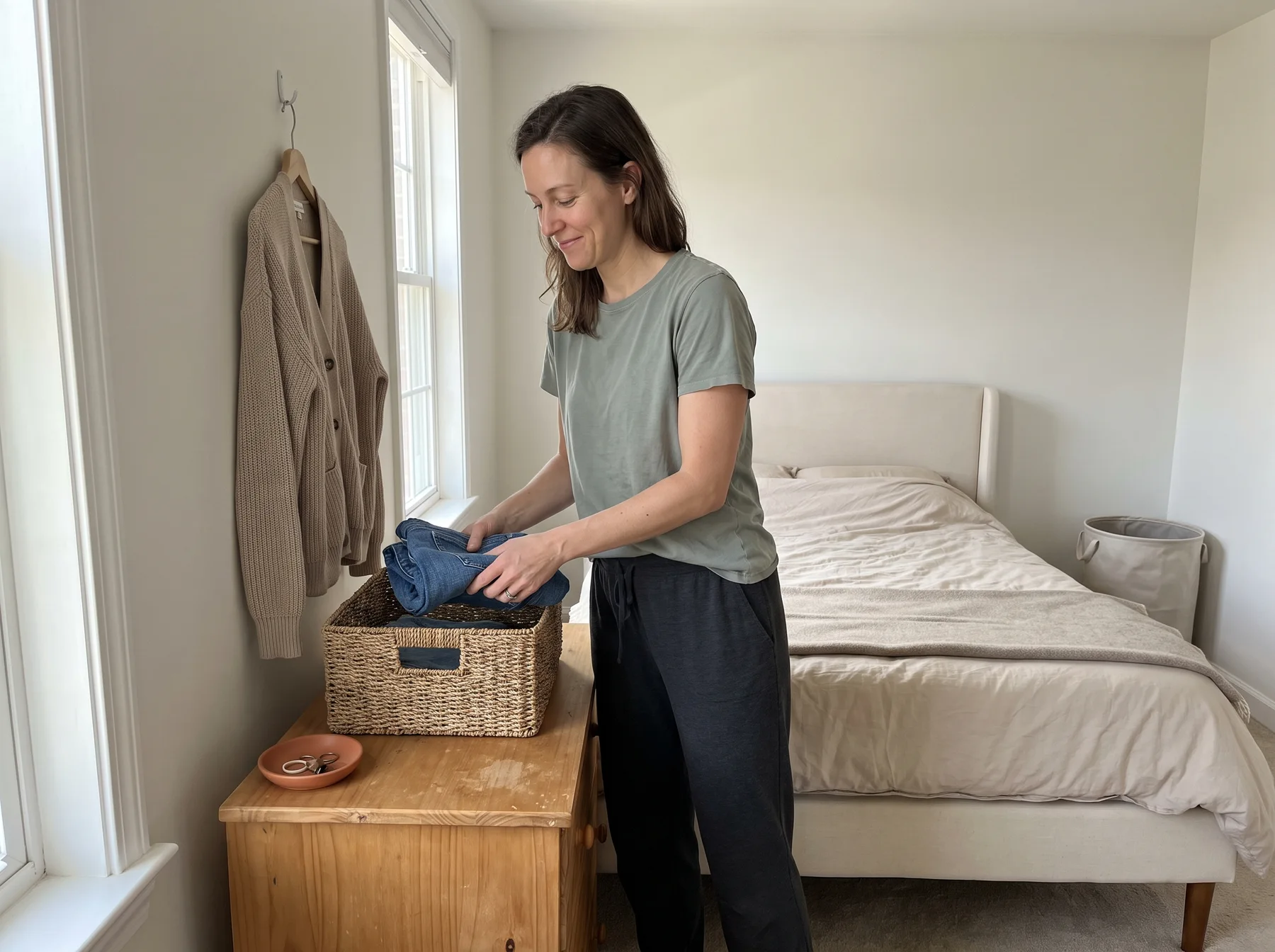
If you're deciding where to put clothes that are not dirty but aren't ready to return to the closet, give them one designated wear-again zone. This small holding area keeps partially worn clothing separate from clean clothes and laundry without letting it take over a chair, the bed, or the floor.
The right location depends on where you get undressed, which garments you rewear, and how much open space you have. A short section of closet rod may suit work shirts and pants. A hook can handle tomorrow's jeans and sweatshirt. One open basket works for soft clothes that don't need to stay wrinkle-free.
The specific container matters less than two rules: choose one compact location, and set a clear capacity limit.
Why wear-again clothes become a recurring bedroom pile
Most clothing storage systems recognize only two categories: clean and dirty. Partially worn clothes sit between them. A sweater worn for a few hours may not need washing, but putting it back beside freshly laundered clothing may not feel right.
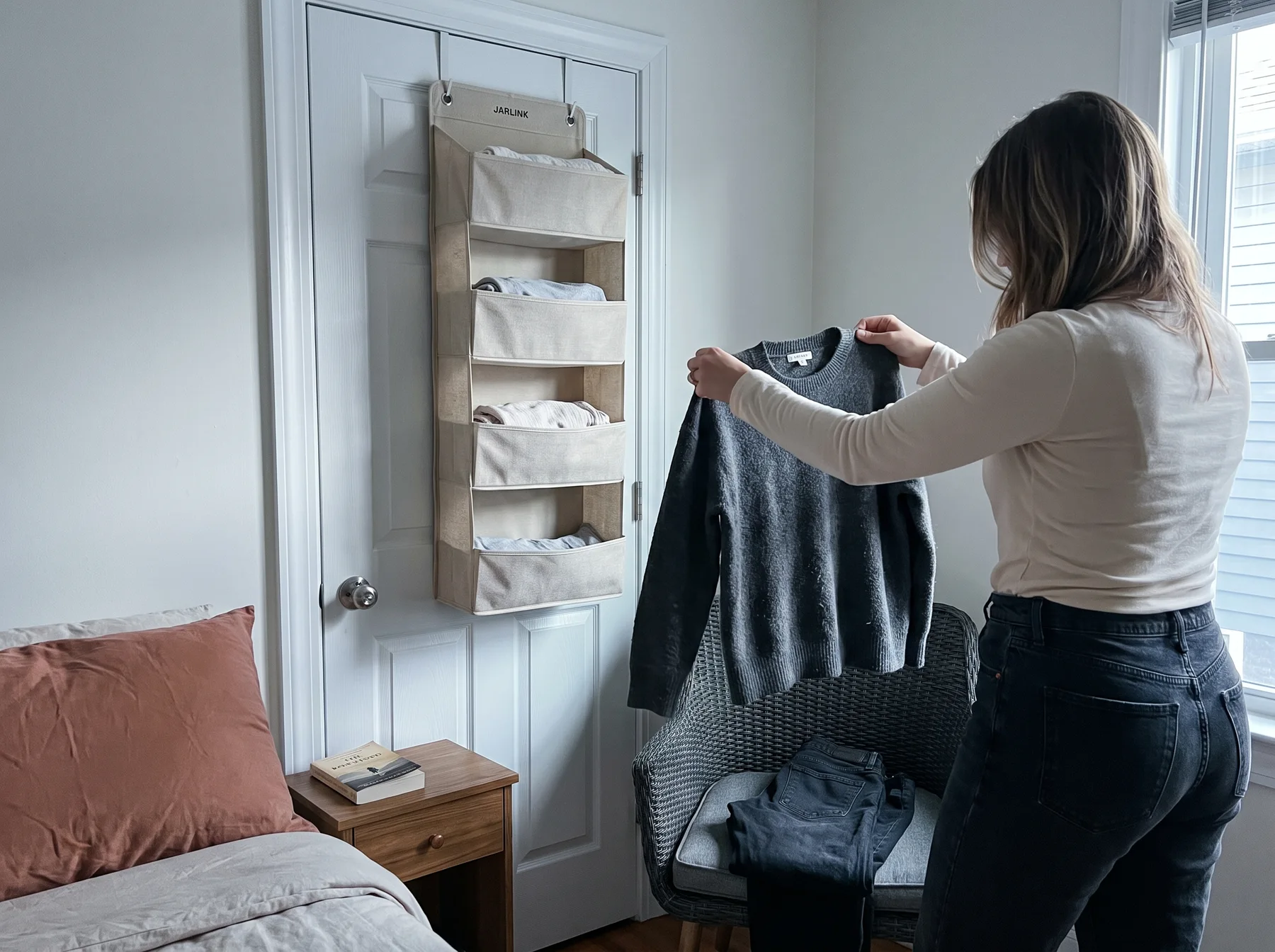
If a ready-made product would help with this step, compare the JARLINK 5-Shelf Over-the-Door Organizer with your available space, the manufacturer's current specifications, and the way you plan to use it before buying.
Without a designated place, these garments land wherever undressing happens. A chair becomes an informal rack. Clothes accumulate on a bench, exercise equipment, or the corner of the bed. Because each piece still seems wearable, nothing provides a natural signal to clear the pile.
Treating wear-again clothing as a legitimate third category resolves that decision. You don't have to judge every garment against an all-or-nothing standard at the end of the day. You only need to decide whether it belongs with clean clothes, laundry, or the limited wear-again group.
Decide what belongs in the wear-again category
The wear-again zone is for dry clothing that you reasonably expect to wear again before the next laundry cycle. Common examples include jeans, cardigans, sweatshirts, pajamas, and an overshirt worn over another layer.
Put an item directly into the laundry if it is wet, visibly soiled, noticeably odorous, or covered with sweat, food, cleaning products, or other residue. Damp clothing needs to dry appropriately before it goes into a hamper, especially if the hamper is enclosed. Follow the garment's care label rather than assuming another wear or a wash is suitable.
Clothing that is fully clean belongs in its regular drawer or closet location. Moving clean clothing into the wear-again zone wastes its limited capacity and makes the category harder to manage.
It also helps to ask whether you'll actually rewear an item soon. If you routinely leave a special outfit in the holding zone for several weeks, it probably belongs back in the closet or in the laundry rather than in indefinite storage.
Where to put clothes that are not dirty based on your routine
Place the wear-again zone close to where you naturally change clothes. A system across the room or inside a crowded closet asks you to create a new habit every night. A hook or basket within reach of your usual changing spot is easier to use consistently.
Before choosing the location, check:
- Available wall, floor, closet rod, and door space
- Door swing and walking clearance
- Air circulation around the clothes
- Whether garments need to hang or can be folded
- Lease restrictions on screws, hooks, and door hardware
- Access to outlets, vents, windows, detectors, and closet contents
If two people share the room, give each person a defined section rather than combining everything in one basket. That can be as simple as one hook per person or a divided length of closet rod. For the rest of the shared storage, this small-closet setup for two people explains how to divide space without relying on an exact 50-50 split.
Compact wear-again zones for a small bedroom
Reserve a short section of closet rod
A dedicated stretch of closet rod keeps shirts, pants, dresses, and light layers visible and relatively wrinkle-free. Use a small number of hangers in a distinct style or color to mark the boundary. Another option is to place one closet rod divider at each end of the section.
This works best when the closet has enough rod space to avoid compressing clean clothing. Leave room around garments rather than wedging worn items into a tightly packed row. If the closet is already full, moving wear-again clothes inside may hide the problem instead of solving it.
Do not return a damp garment to an enclosed closet. Let it dry in a suitable, ventilated location first, following its care instructions.
Use an existing wall or furniture hook
One sturdy hook can hold the outfit you expect to wear the next day. It takes almost no floor space and creates a natural limit because only a few garments fit before the hook becomes inconvenient.
Use an existing hook when possible. If you're considering an adhesive or screw-mounted hook, check the lease, wall surface, installation directions, and stated weight limit. Paint condition and humidity can affect removable products, and removable hardware is not necessarily damage-free.
Avoid mounting a hook where clothing can block a vent, touch a heater, cover a detector, catch in a door, or narrow a required path through the room.
Use the back of a door only after measuring
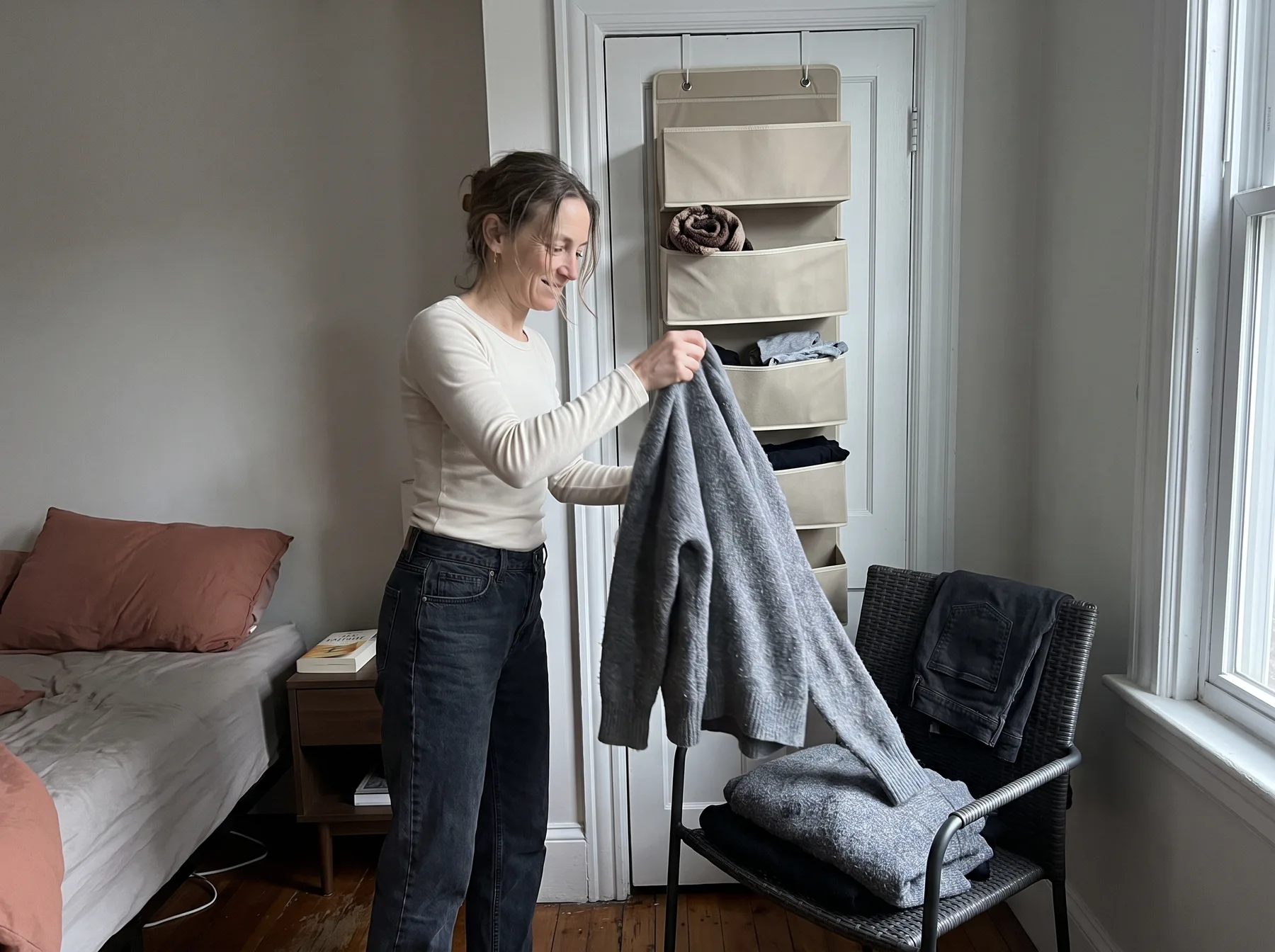
An over-door location can use otherwise empty space, but it isn't automatically suitable for every bedroom. Measure the door thickness and the gap above it. Confirm that the hardware won't scrape the frame or stop the door from closing. Also check how far the rack and clothing will project when the door opens toward a wall, dresser, or walkway.
A multi-bar rack can separate pants, a shirt, and a light layer without placing everything on one hook. For example, the FLE three-tier over-the-door towel rack has three spaced bars and two hooks. Its listed dimensions are approximately 24 by 16.7 inches, and its door hook fits doors up to 1.77 inches thick. Measure the door, top gap, wall clearance, and the projected depth of your clothing before ordering. Follow the manufacturer's installation and use instructions.
Choose one open basket for foldable clothing
An open basket works for pajamas, leggings, sweatshirts, and other soft garments that can tolerate folding. It also makes sense when you have floor space beside a dresser but little wall or closet capacity.
Choose a shallow basket rather than a deep hamper. A deep container encourages layers of forgotten clothing and makes the wear-again group look like laundry. An open top keeps the category visible and allows better air circulation than a tightly closed bin, although it is not a place for wet garments.
Fold or loosely roll each item before placing it inside. If you toss clothing into the basket, it will quickly become another pile with a rim around it.
Match the storage method to the garment
You don't need a separate organizer for every type of clothing. Choose the method that suits most of what you rewear.
Hang garments when wrinkles matter or when a waistband, belt loop, or hanger can support them without stretching the fabric. Shirts, trousers, skirts, and light jackets often benefit from hanging. Follow garment care directions, particularly for knits that may stretch on a hanger.
Fold items that are soft, stretchy, or unlikely to wrinkle. Pajamas, casual shorts, leggings, and sweatshirts can usually share one open basket or shelf.
Try not to create both a hook zone and a basket zone unless you regularly use each one. In a small bedroom, multiple wear-again locations make it easy to lose track of the category. If hanging and folding are both necessary, keep them together, such as one hook directly above one small basket, and treat the combined setup as a single zone.
Set a physical limit so the zone cannot become a second closet
A wear-again system needs a visible boundary. Otherwise, every garment that might be worn again earns a permanent place there.
Let the storage itself define the limit:
- One hook with no layering beyond what is easy to see
- Three to five designated hangers
- One shallow basket that must close or remain below its rim
- One over-door bar for each current outfit or garment group
Choose a limit that reflects your laundry schedule and normal wardrobe. Someone who rewears one pair of jeans may need only a hook. Someone who rotates several office layers may need a few hangers. The goal is not to fit every possibly wearable item. It is to hold a manageable set until you make the next decision.
When the zone reaches capacity, don't add another container. Review what is already there. Move each piece to the laundry, return it to clean storage if appropriate, or commit to wearing it next.
Reset the wear-again zone regularly
Attach the reset to an event that already happens, such as laundry day or the end of the week. Take everything out so older items cannot remain hidden beneath newer ones.
For each garment, decide whether to wash it, wear it soon, or return it to regular storage if it is genuinely clean and suitable to put away. Check pockets before washing or storing anything. Wipe out the basket or dust the hook area as needed.
A weekly reset is a useful starting point, but your schedule can follow how often you do laundry. The important part is having a recurring decision point. One compact zone, a firm capacity, and a regular reset turn wear-again clothing into a controlled category rather than a permanent bedroom pile.
Join the conversation
0 comments
Leave a comment
Your email address will not be published. Comments are reviewed before appearing.