
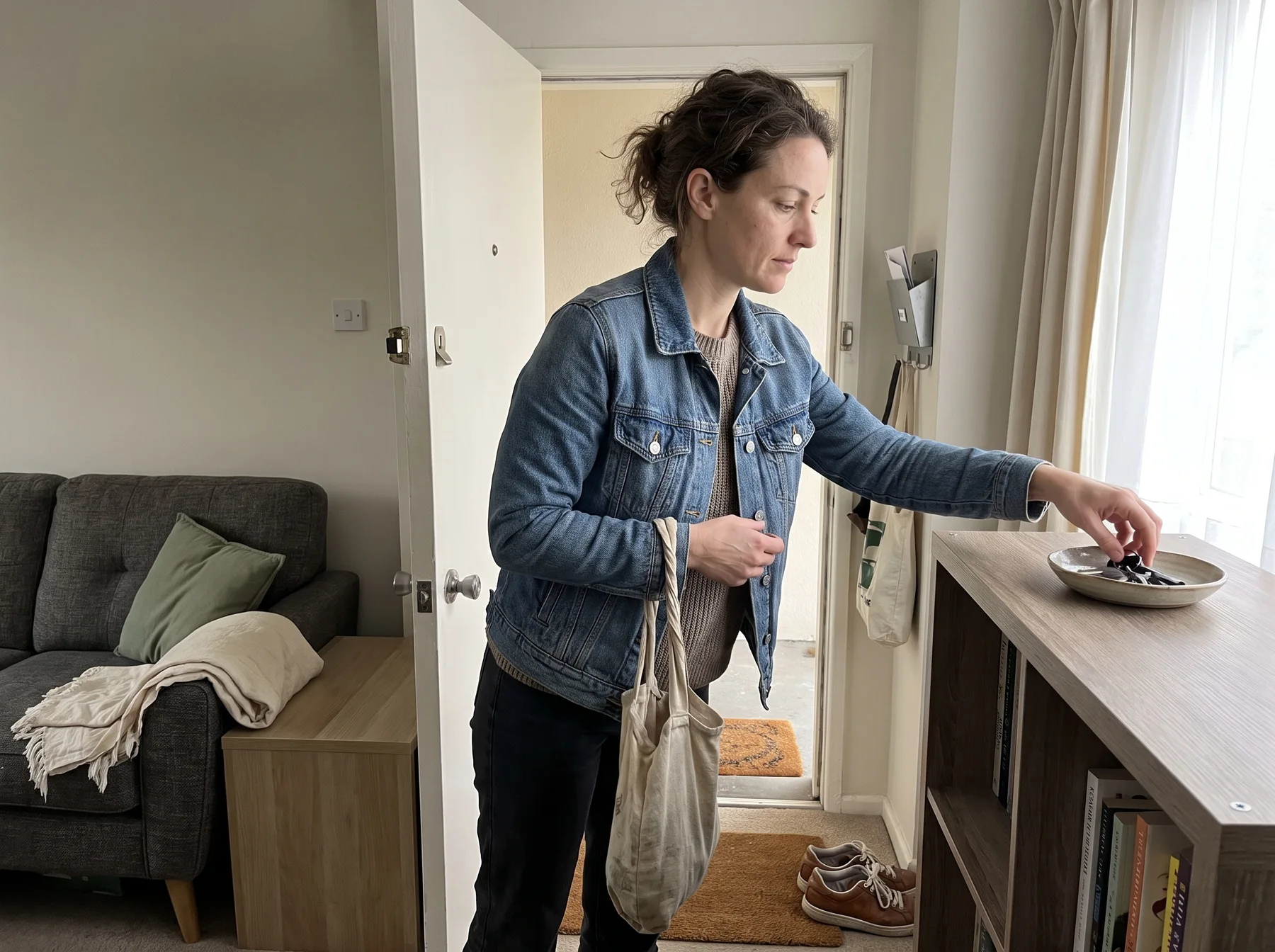
When the front door opens directly into a kitchen or living room, the best entry setup is rarely a full piece of entryway furniture. It is a small landing zone that handles the items you use every day, plus an overflow area elsewhere for coats, extra shoes, and seasonal gear.
The right arrangement depends first on the door swing and walking route, not on how many hooks or baskets you can fit nearby. Protect those clearances, identify what actually piles up, and give each recurring item the smallest practical destination.
Start with what lands by your door each day
Before buying an organizer, spend a few ordinary days noticing what enters the apartment with you. The pile by the door often includes more than shoes and coats:
- Keys, wallet, sunglasses, and headphones
- Mail, flyers, and packages
- Work bags, backpacks, or purses
- Shoes worn several times a week
- Wet umbrellas or rain jackets
- Dog walking supplies
- Items waiting to be returned
- Reusable shopping bags
Separate these items into three groups: daily, occasional, and transit. Daily items need a convenient home close to the door. Occasional items, such as dress shoes or seasonal coats, can live in a closet or bedroom. Transit items, including outgoing mail and store returns, need a temporary holding place that gets emptied regularly.
This distinction matters because a tiny entrance cannot serve as storage for everything associated with leaving home. It only needs to support the next arrival and departure.
Pay attention to habits as well as objects. If you always drop keys with your right hand after closing the door, a key tray across the room may go unused. If everyone removes shoes immediately, shoe storage must be reachable without stepping farther into the apartment in wet footwear.
Map the door swing, walking route, and required clearances
Open the front door fully and look at the space it travels through. Nothing should sit where the door can strike it, trap it, or push it across the floor. Check whether a doormat, shoe rack, basket, or loose bag interferes with opening and closing the door.
Next, trace the natural route from the door into the apartment. A landing zone placed directly on that route creates a daily bottleneck, even if it looks tidy when nobody is using it. Consider how the layout works when someone is carrying groceries, maneuvering a stroller, or passing another person near the entrance.
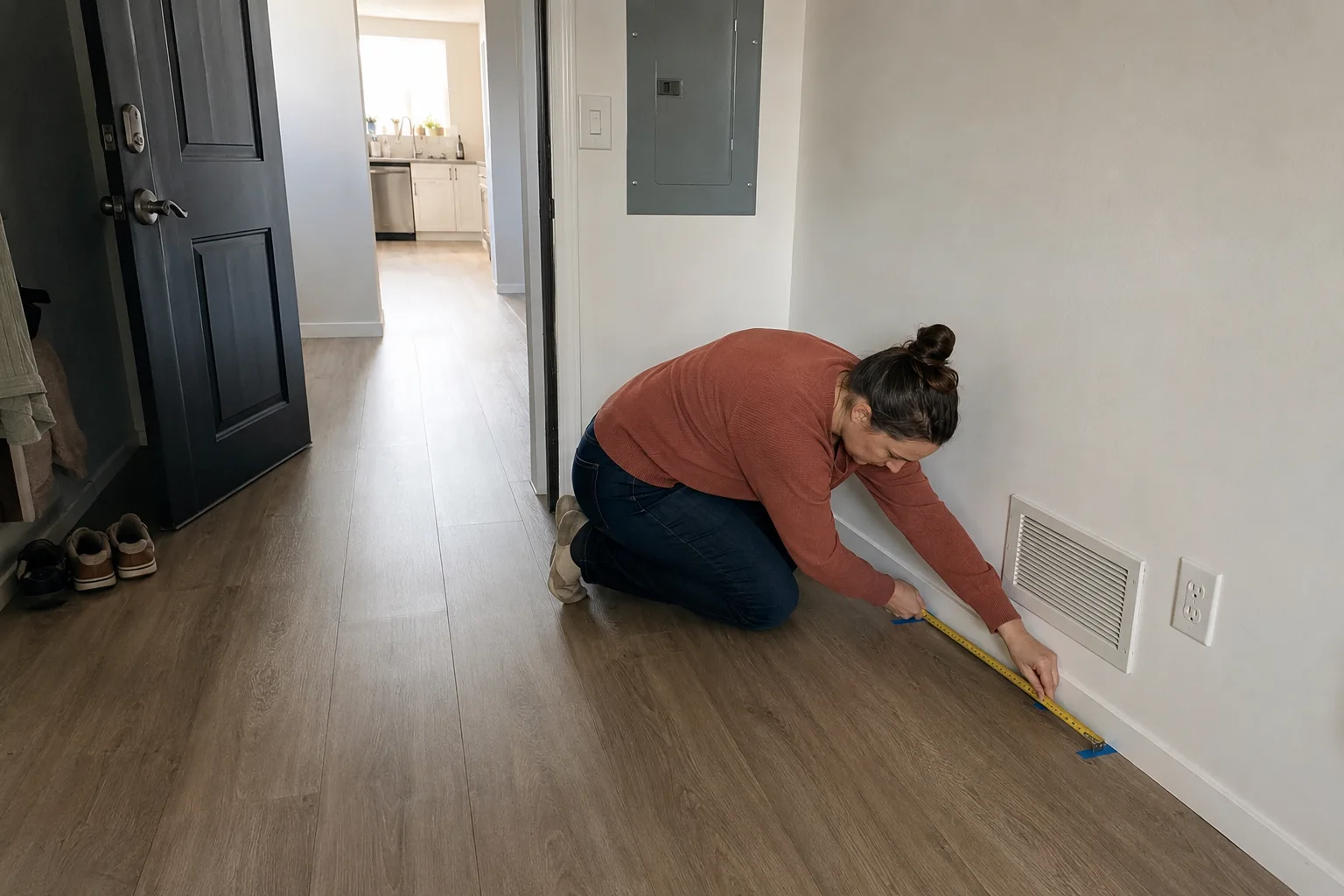
Also keep locks, intercoms, electrical panels, ventilation openings, detectors, and utility access unobstructed. Do not cover apartment numbers, peepholes, or security equipment.
Painter's tape can help you test the footprint of a narrow shelf or shoe rack. Mark the proposed edges on the floor, then use the entrance normally for a few days. If you regularly step around the outline, reduce the footprint or move the storage elsewhere.
Choose the smallest workable apartment entryway organization setup
Once you know what must stay near the door, match the landing zone to the available surface rather than trying to recreate a traditional foyer.
If you have a narrow strip of wall
Use vertical space for lightweight daily items. A small key rack, shallow wall pocket, or row of hooks may be enough. If your lease allows wall mounting, use suitable hardware and follow the product instructions. Adhesive hardware can still remove paint or fail on unsuitable surfaces, so removable does not mean damage-free.
Keep hooks out of shoulder and head height along the walking route. Hanging several heavy bags from one small hook can also damage the wall or pull the hardware loose.
If the door opens against the only usable wall
Do not put storage behind the door if it limits how far the door opens. Look at the first available wall beyond the swing instead, even if it is several steps into the room. A landing zone does not have to touch the threshold to work.
A small tray on the end of a kitchen counter or a hook beside a bookcase can function as part of the entrance. What matters is that it is convenient and does not take over a food preparation or dining surface.
If you have no open wall or floor space
Borrow small destinations from existing furniture. Assign one bowl or tray on a nearby shelf to keys. Use one drawer for sunglasses, headphones, and dog supplies. Hang a bag from a sturdy hook inside a closet rather than leaving it on the floor.
This distributed approach is often better than squeezing a narrow console into a crowded room. The items do not need to live together as long as each one has a predictable home.
Contain everyday shoes without using the shared hallway
Shared hallways, stair landings, and corridors are not reliable storage areas. Shoes left outside the apartment can obstruct circulation, conflict with building rules, or disappear. Keep them inside unless your property manager has explicitly approved another arrangement.
Start by limiting the entrance to the shoes currently in regular rotation. One or two pairs per person may be enough. Store special occasion, off-season, and rarely worn shoes in a bedroom or closet.
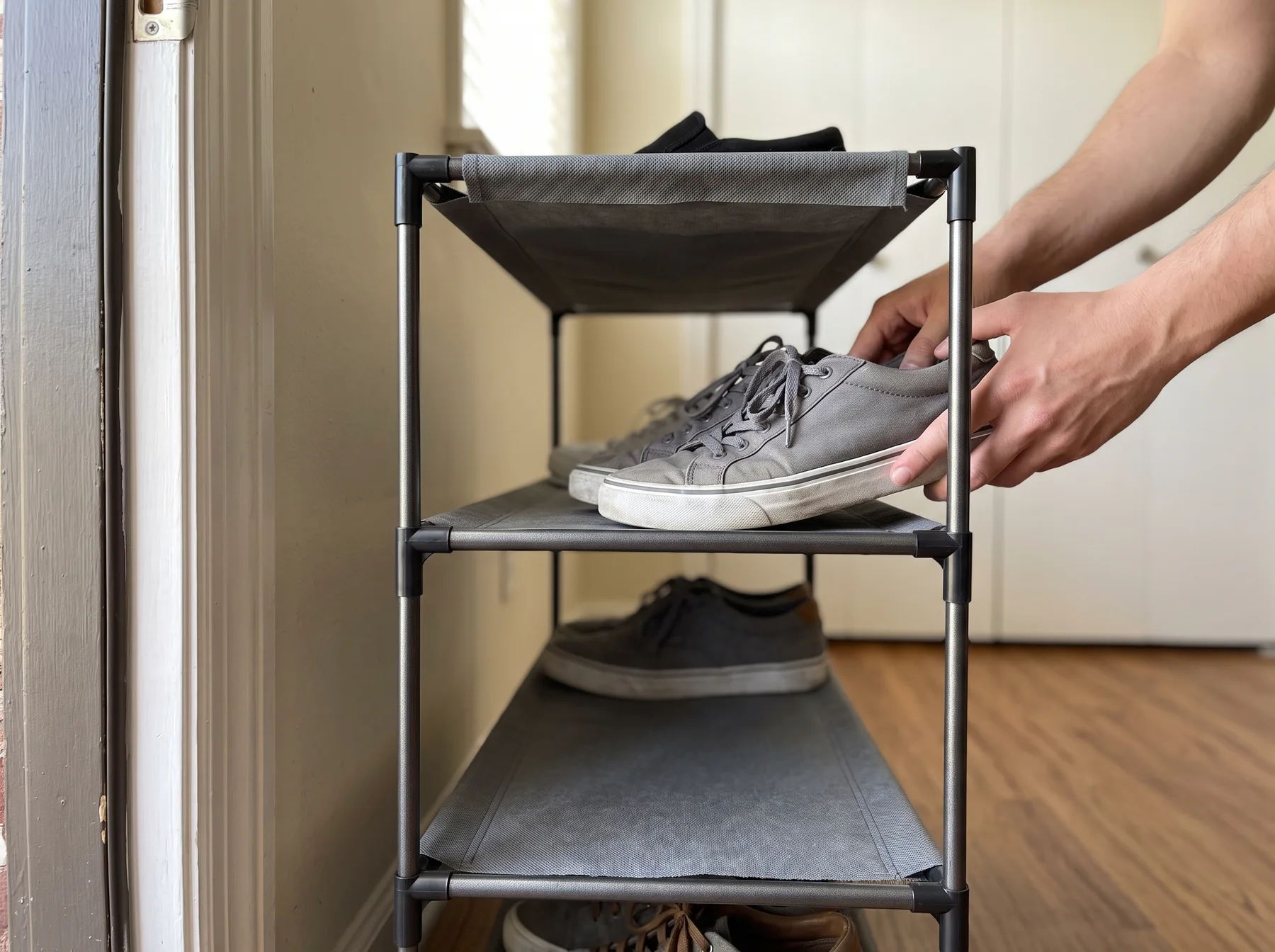
For a very tight layout, a washable boot tray or low bin can define the shoe area. Choose one that fits completely outside the door swing. If the floor is sensitive to moisture, check beneath the tray regularly and let wet shoes dry rather than sealing them in a closed container.
A narrow freestanding rack can use vertical space when the footprint permits it. The Kitsure 3-Tier Shoe Rack is approximately 27.5 inches wide and uses metal tubes with nonwoven shelves. Measure the available width and depth before considering it, place it on a stable surface, and do not use it as a seat.
If even a narrow rack pinches the walking route, move the main shoe collection to a closet. A single tray by the door can then hold the pair being removed or worn next.
Give keys, mail, bags, and returns separate, tiny destinations
Small loose objects become clutter when one container is expected to handle all of them. Keys get buried under mail, and outgoing returns blend into packages that have just arrived. Instead, assign a very small destination to each category.
Keys and pocket items
Use a shallow tray, cup, or secure hook near the point where you naturally stop. The container should be large enough for daily essentials but too small to become a miscellaneous drawer in plain sight.
If house keys display identifying labels, avoid leaving them visible through a window or glass door. A drawer or covered container may be a better choice.
Mail and paper
Create one inbox for mail that needs attention. Sort recycling promptly, then move bills and documents to the place where you handle paperwork. The entrance should be a transfer point, not a permanent paper archive.
A vertical file holder can take less surface area than a wide basket, but it still needs a regular clearing schedule. If you rarely receive important paper mail, a single slim folder may be enough.
Bags
A work bag or backpack needs a destination that keeps straps off the floor. Use a sturdy hook where permitted, a shelf, or one side of a closet. Confirm that mounted hardware and the supporting surface are appropriate for the expected weight.
Avoid hanging a heavy bag from a door handle. It can interfere with the lock, damage the handle, and slow access to the exit.
Returns and outgoing items
Choose one tote or basket for items that need to leave the apartment. Place it near the landing zone only if it stays out of the walking route. If the entrance is too tight, keep the basket in a closet and add a reminder to your calendar or shopping list.
Set a firm physical limit. When the container is full, handle the returns rather than starting another pile.
Move coats and seasonal gear to a nearby overflow zone
Coats consume depth quickly, particularly when they hang from wall hooks. In an entrance that opens into a living room, a row of bulky coats can narrow the route and make the whole room feel crowded.
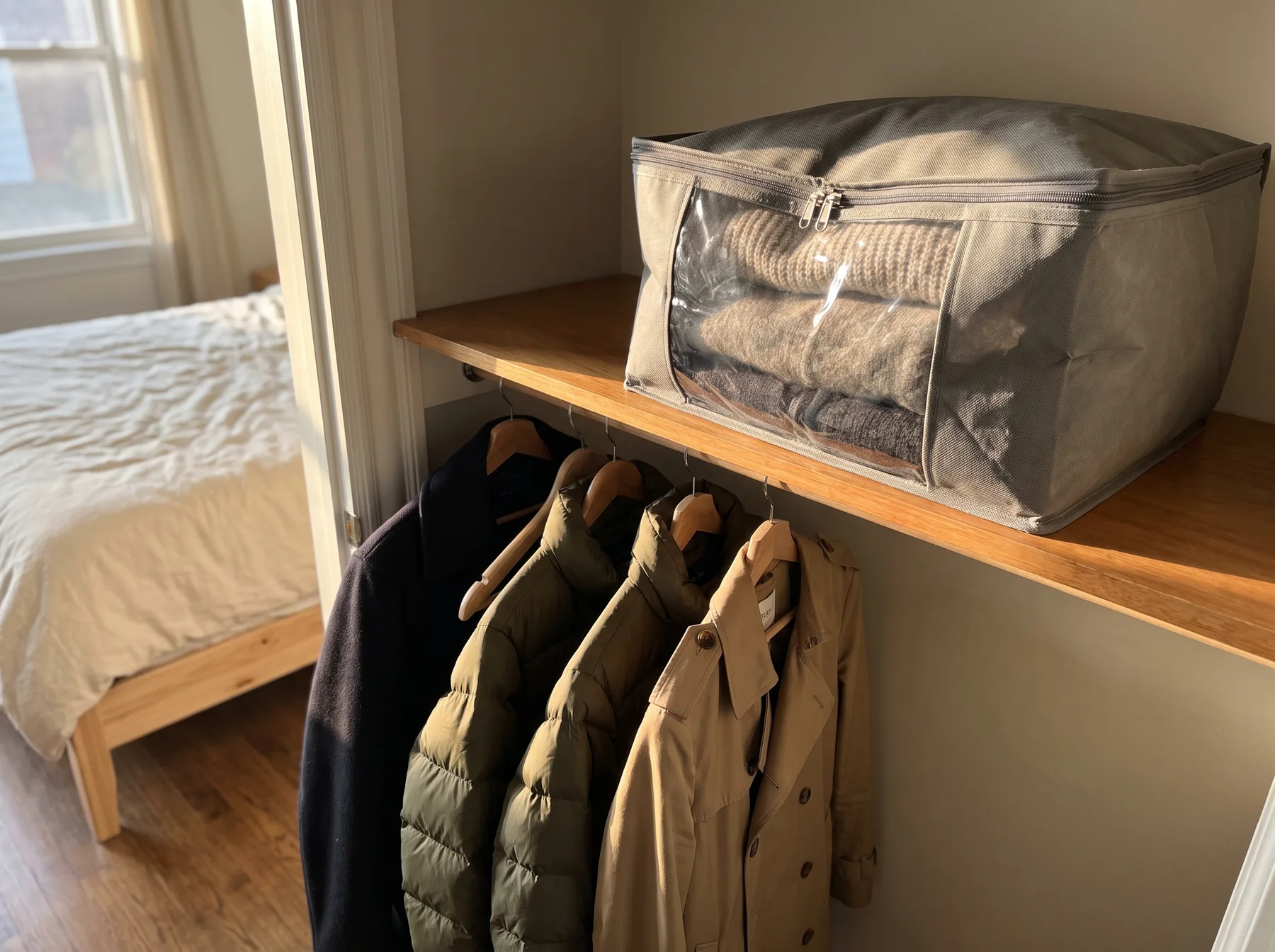
Keep only the outerwear currently in use near the door. Move extra jackets, hats, gloves, and off-season footwear to a bedroom closet, underbed storage, or the upper shelf of an existing wardrobe. If two people share limited closet space, a fair system for organizing a small closet for two can help divide everyday and overflow storage without letting one person's belongings take over.
Soft containers can work for clean, completely dry seasonal textiles on a closet shelf or under a bed. The Lifewit Fabric Clothes Storage Bags have clear windows and zipper closures, but they do not have a rigid internal frame. They are intended for dry bedding and seasonal clothing, not damp laundry. Check the dimensions of your storage area before choosing any bag.
Wet coats and umbrellas need ventilation. Let them dry in an appropriate bathroom, laundry area, or other water-tolerant location instead of packing them into closed storage. Protect floors from drips and keep damp fabric away from electrical equipment and heat sources.
Define the entry visually without adding bulky furniture
A front door that opens into another room can still feel like a distinct arrival point. The goal is to create a visual boundary without shrinking the usable path.
An appropriately sized doormat is often enough. It marks where outdoor dirt stops and gives shoes a temporary place during removal. Choose a low profile that does not catch under the door, curl at the edges, or slide on the floor.
Other subtle ways to define the area include:
- A small wall color accent, if painting is allowed
- One piece of art above a key tray
- Matching hooks that keep necessary items visually orderly
- A narrow washable runner placed outside the door swing
- A compact mirror mounted with lease-approved hardware
Use a mirror only where it will not create glare or confuse the walking route. A freestanding leaning mirror may not be suitable in a narrow entrance unless it is secured according to its manufacturer instructions.
You can also use the side of existing furniture as a boundary. For example, the end of a bookcase may hold a small tray while the lower shelf contains a basket for reusable bags. Avoid placing tall, unstable furniture where the opening door or a carried package could strike it.
Test the setup for one week
A landing zone should make entering and leaving easier without demanding constant rearrangement. Use the proposed setup for a full week, including a grocery trip, laundry day, package delivery, or rainy day if those situations occur.
Watch for specific problems:
- The door bumps a rack, basket, mat, or hanging coat.
- Shoes spread beyond their assigned tray.
- Bags end up on the floor because the hook is inconvenient.
- Mail covers a kitchen work surface.
- Two people cannot use the entrance comfortably at once.
- Wet items have nowhere safe to dry.
- The exit route becomes narrower as the week progresses.
Remove or relocate anything that creates a bottleneck. A useful entrance may consist of only a mat, a key tray, and space for the day's shoes. Coats, bags, paperwork, and seasonal gear can live several steps away.
The strongest apartment entryway organization plan is not the one that stores the most beside the door. It is the one that keeps daily essentials predictable while preserving a clear, comfortable exit.
Join the conversation
0 comments
Leave a comment
Your email address will not be published. Comments are reviewed before appearing.