
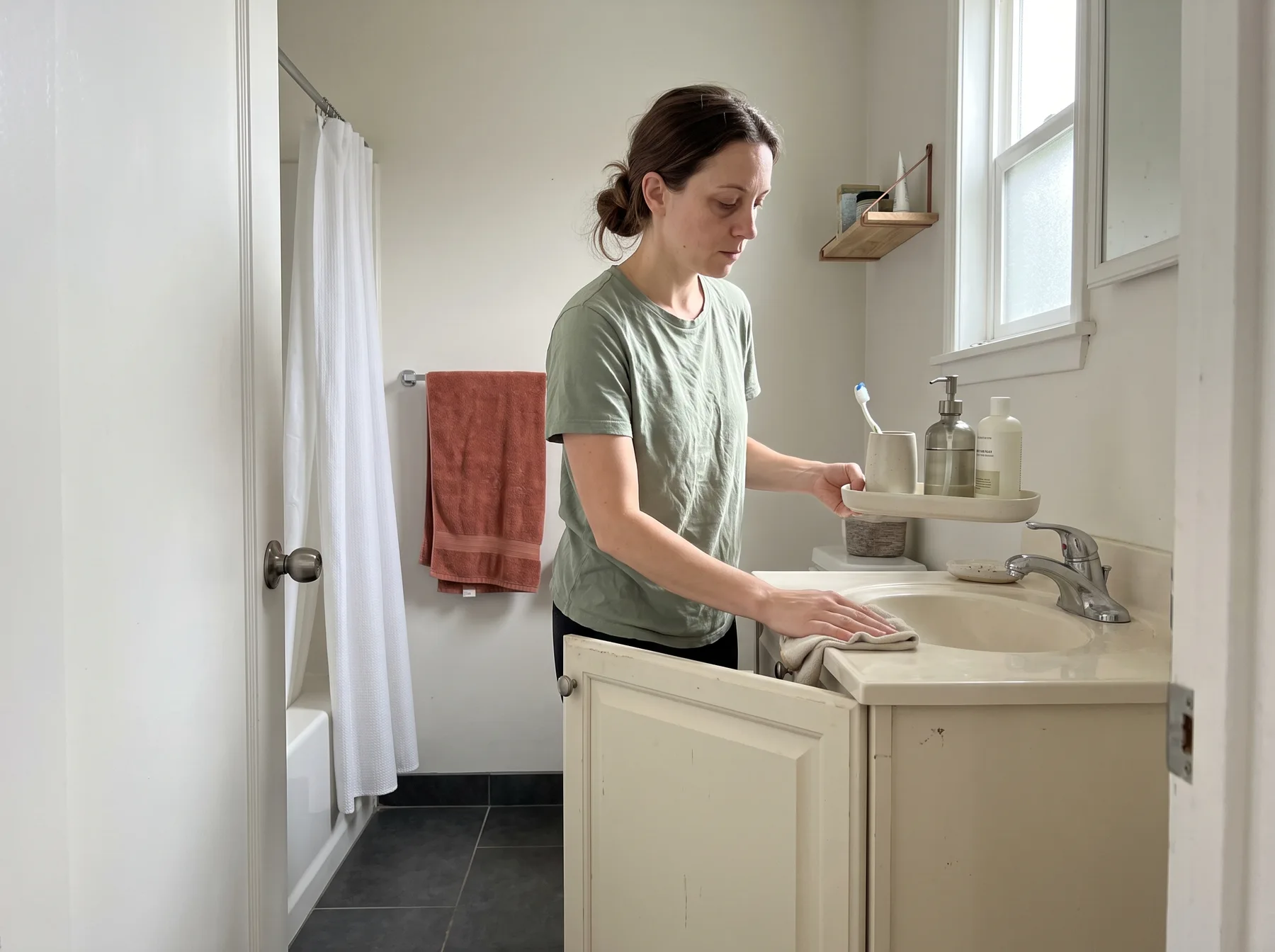
Good small bathroom storage starts with access, not containers. Keep daily items within easy reach, move backup supplies away from the sink, and protect the clear space needed for doors, plumbing, ventilation, and safe movement. Only then should you add shelves, carts, or organizers.
This order matters because a bathroom is not simply a small room. It has wet surfaces, changing humidity, narrow walkways, and fixtures that may need quick maintenance. A cabinet that technically fits can still block a shutoff valve. A rolling cart can add capacity but become a tripping hazard. Open baskets may look convenient while exposing paper goods and towels to splashes.
The goal is a bathroom that supports the daily routine without filling every available inch.
Set the priority order before buying storage
When space is tight, each storage decision should pass through the same set of priorities:
- Protect safe access. Keep the entry, door swing, shower exit, toilet area, and main walkway open.
- Preserve service access. Do not cover plumbing connections, shutoff valves, outlets, vents, access panels, or removable toilet parts.
- Keep moisture-sensitive items dry. Store medicines, paper products, electronics, and clean textiles away from splash zones and persistent humidity.
- Make daily items easy to reach. Toothpaste should not require moving three bins every morning.
- Use remaining space for backup supplies. Extra soap, unopened toiletries, and surplus toilet paper can occupy less convenient locations.
This approach may leave some wall or floor space unused. That is often a better result than squeezing in a cabinet that interferes with cleaning or movement.
Audit the room, routine, and rental limits
A useful audit has two parts. First, measure the bathroom. Then list what happens there and what must be stored there.
Measure usable space, not empty space
Record the width, depth, and height of each possible storage location. Include baseboards, trim, hinges, pipe bends, and anything that projects from the wall. Measure at several points because walls and floors are not always perfectly square.
Check these locations:
- The cabinet under the sink
- The wall above the toilet, if storage there will not interfere with use or maintenance
- Narrow gaps beside the vanity or toilet
- The back of the door, including handle and towel hook clearance
- Open wall sections outside direct splash zones
- Space above an existing towel bar
- Any recessed ledge or built-in cabinet
For floor storage, mark the proposed footprint with painter's tape. Open every door and drawer. Walk through the room, step out of the shower, and test whether the placement makes normal movement awkward.
Product dimensions should include more than the outside width. A sliding drawer needs room to extend. A cart needs turning and handle clearance. A lidded hamper needs vertical opening space. Wall shelves need enough depth to hold items without creating a head-level obstacle.
List what the bathroom actually needs
Sort bathroom contents into four groups:
- Daily items: toothbrushes, facial care, deodorant, and frequently used hair products
- Weekly items: grooming tools, cleaning supplies, and less frequently used toiletries
- Backstock: unopened soap, toilet paper, toothpaste, and personal care refills
- Items that belong elsewhere: expired products, bulk packages, seldom-used appliances, and medicines affected by bathroom heat or humidity
The last group often provides the quickest improvement. A small bathroom should not carry the entire household supply of every toiletry. Keep a working quantity in the room and move bulk packages to a dry closet, bedroom cabinet, or other appropriate location.
If towels are consuming the available cabinet space, a separate small-apartment towel storage plan can help divide clean towels, in-use towels, and laundry without crowding the vanity.
Check the lease before mounting anything
Rental rules may limit drilling, adhesive products, over-door hardware, or changes near tile. Even removable adhesive can pull paint, leave residue, or affect a surface finish. Suction cups depend on a smooth, clean surface and should not support fragile or hazardous items.
Build small bathroom storage from the sink outward
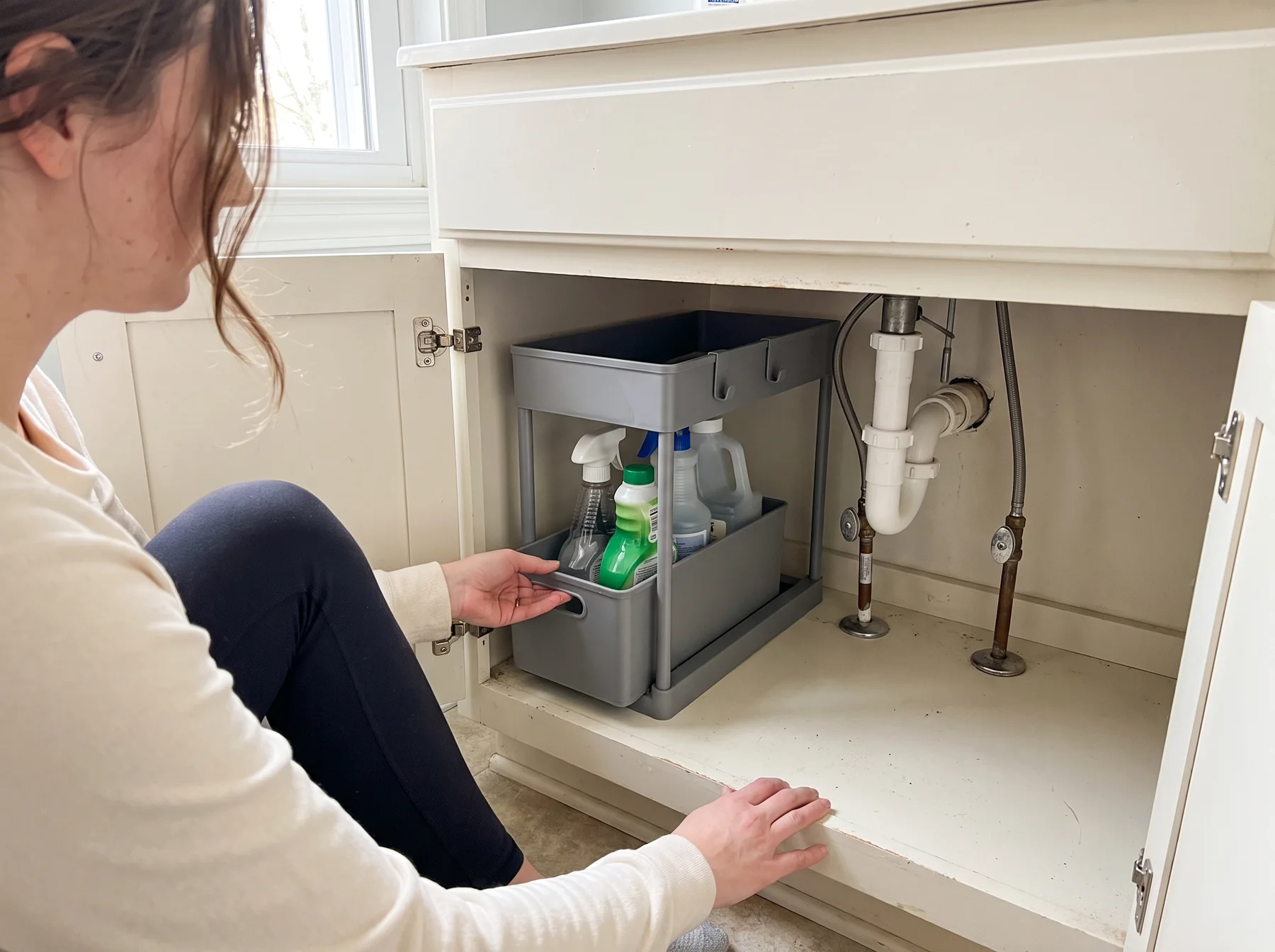
The sink is usually the busiest surface, so start there. The objective is not necessarily an empty counter. It is a counter that can be wiped without relocating a pile of products.
Give daily counter items one boundary
Keep only items used every day on the counter. Place them in one shallow tray, cup, or easy-to-lift container. A defined boundary prevents bottles from gradually spreading across the whole vanity.
Choose materials that tolerate bathroom moisture and can be washed or wiped. Avoid deep containers for small daily products because items disappear at the bottom. Leave enough open counter space for handwashing and routine cleaning.
If several people share the bathroom, assign each person a small section or portable caddy. A caddy can move to a bedroom shelf or closet when the bathroom has almost no protected storage.
Fit under-sink storage around plumbing
The cabinet under a sink can hold useful volume, but pipes and valves make it irregular. Do not begin by ordering matching bins. Measure the door opening, interior width, depth, and height, then map the drainpipe, supply lines, disposal equipment if present, and shutoff valves.
Use shallow bins for grouped items such as hair care, shaving supplies, or cleaning cloths. Choose bins that can be removed without disconnecting or leaning on pipes. Put leak-sensitive paper goods elsewhere, and check the cabinet periodically for moisture.
Sliding organizers can improve access at the back, but their frames and drawer paths need to clear the plumbing. The Kitstorack adjustable under-sink organizers are a two-pack with adjustable-height sliding storage. Before considering them, compare the organizer dimensions with the cabinet opening and pipe layout. Keep shutoff valves reachable, and confirm that any adhesive or suction mounting method suits the cabinet surface.
Use drawers by frequency and item height
Shallow vanity drawers work best when items lie in a single layer or stand in compartments sized for them. Put the most frequently used products in the easiest drawer. Store small duplicates behind or below the active product rather than mixing all refills together.
Measure the inside drawer height before buying dividers. A bottle may fit inside the drawer but still prevent it from closing. Adjustable dividers are often more flexible than a molded insert, especially when product sizes change.
Add wall storage only where it stays usable
Wall space can hold shallow cabinets, shelves, baskets, or hooks. Place these outside direct splash zones and away from places where someone may strike them while standing, bending, or leaving the shower.
A closed cabinet protects contents from splashes and visual clutter. Open shelves make frequently used items easy to reach but require more dusting and expose contents to humidity. A shallow shelf is generally less intrusive than a deep one, but it still needs secure installation and an appropriate weight limit.
Above-toilet storage deserves particular care. Leave access for the tank lid and repairs. Do not store heavy, breakable, or sharp objects where they can fall. If the toilet sits near a shower, reserve open storage for moisture-tolerant items rather than spare paper products.
Treat the back of the door as conditional space
An over-door organizer can work when it does not prevent the door from closing, scrape the frame, interfere with the handle, or overload the hinges. Check the gap above the door and the thickness accepted by the hardware.
Hooks are useful for robes and in-use towels if the textiles can hang open and dry. Crowding several damp towels on one hook slows drying and can trap moisture against the door or wall.
Use narrow gaps without creating a cleaning trap
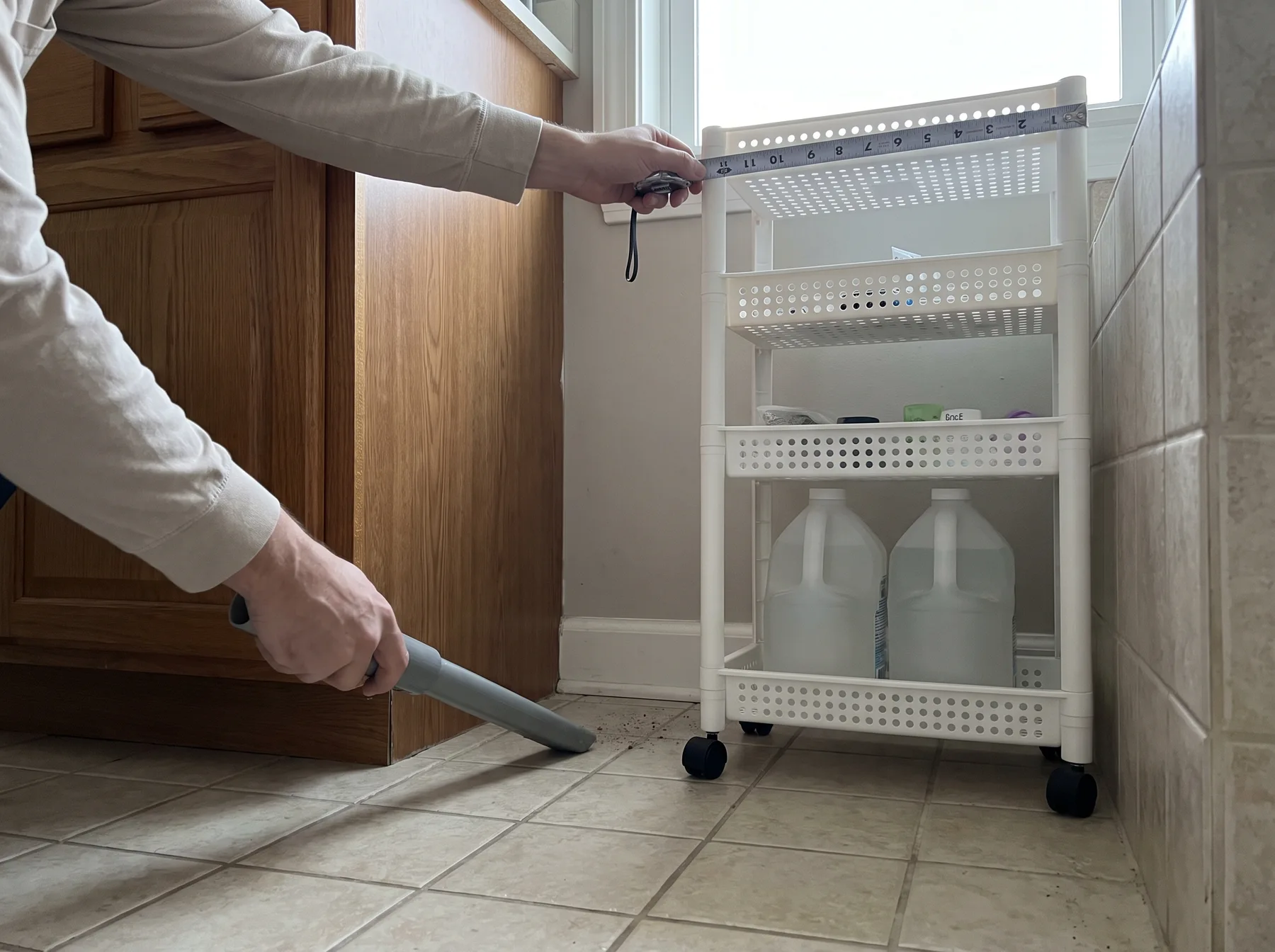
A slim gap beside a vanity may look like free storage, but not every gap should be filled. Dust, hair, and moisture collect in spaces that are too narrow for a vacuum head, mop, or hand.
If you use a narrow cart, choose one that can roll out completely. Confirm the width at floor level and above the baseboard. Also check whether supply lines, trim, or a projecting countertop reduce the usable space.
The Pipishell slim four-tier rolling cart is approximately 7.1 inches wide and has perforated shelves. It may suit small toiletries or cleaning supplies in a measured gap. Keep heavier items on the lower shelves, follow the product's load guidance, and do not let the cart block a walkway, vent, outlet, or plumbing service area.
A cart is not the only option. A handled bin may work better in a short, deep gap because it can be removed for cleaning. If the space is difficult to reach or stays damp, leaving it open may be the most practical choice.
Match storage to bathroom wet zones and ventilation
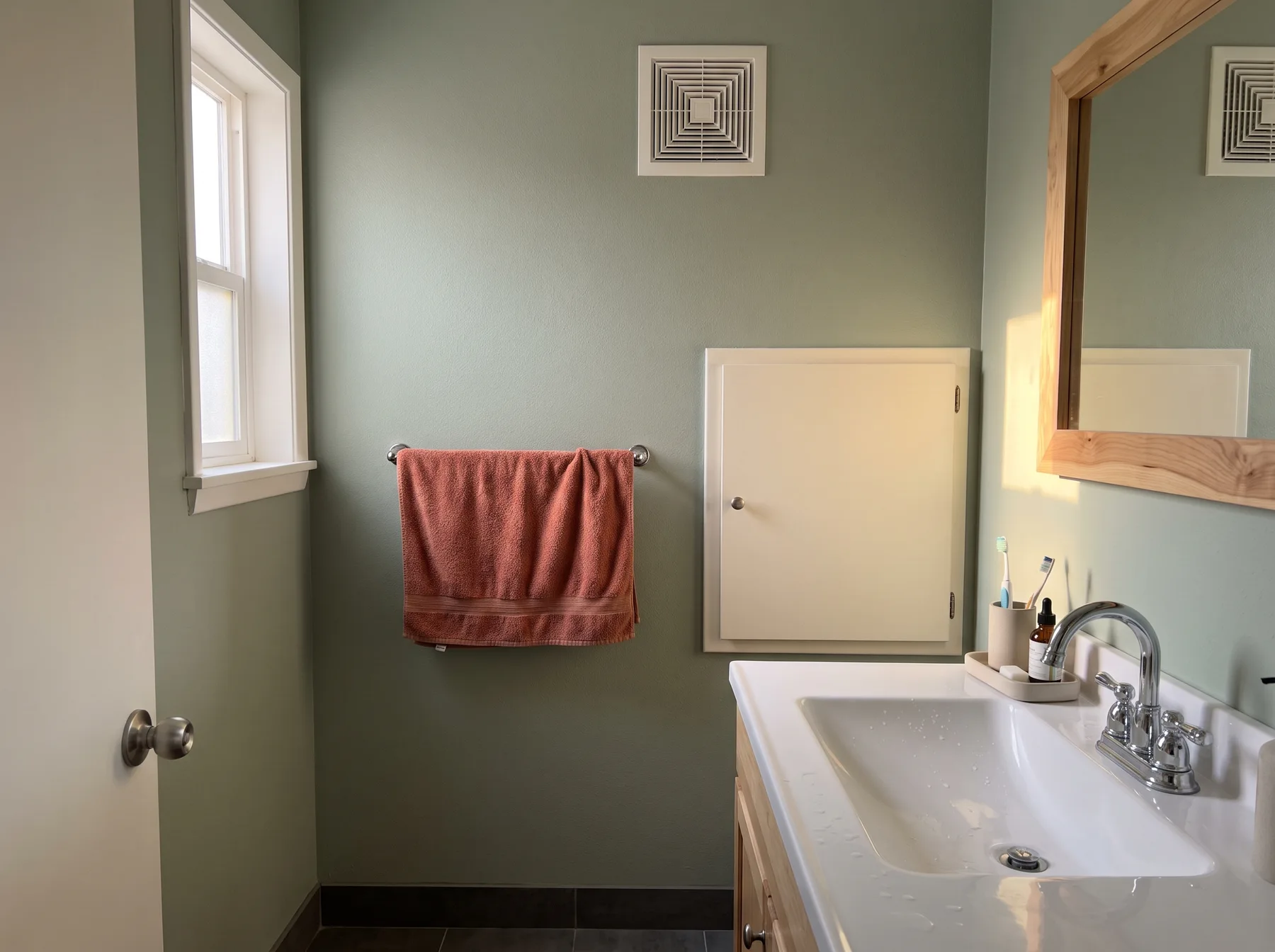
Storage should reflect how water moves through the room. Think of the bathroom as three general zones.
Direct splash areas
These include sink edges, the tub rim, and locations beside an open shower. Limit storage here to washable, water-tolerant items. Do not keep toilet paper, cardboard packages, medicines, electrical devices, or clean towels where they regularly get wet.
Humid but protected areas
A vanity cabinet or closed wall cabinet may stay out of direct splashes while still experiencing humidity. Use containers that can be wiped and leave room for air circulation. Avoid packing textiles tightly against a wall that tends to collect condensation.
Drier storage areas
A hall closet, bedroom cabinet, or other dry location is often better for bulk toilet paper, extra towels, medicines, and seldom-used electrical grooming tools. If supplies are shared across a small home, the room-by-room principles in this small-apartment organization system can help assign backstock without scattering it randomly.
Storage must not cover an exhaust fan, air return, heater, or ventilation opening. Run the bathroom fan as directed for the space and keep stored items from restricting airflow. Persistent dampness, leaks, or visible mold require attention to the moisture source rather than another storage container.
Compare storage options by the problem they solve
| Storage option | Best use | Main limitation | |---|---|---| | Shallow counter tray | Daily toiletries | Uses counter area and needs regular wiping | | Portable caddy | Shared bathrooms or almost no built-in storage | Requires another place to keep the caddy | | Under-sink bins | Grouped weekly supplies | Must fit around pipes and valves | | Sliding under-sink organizer | Reaching items at the back | Needs drawer extension and plumbing clearance | | Shallow wall cabinet | Protected vertical storage | Usually requires approved, secure mounting | | Open shelf | Frequently used, moisture-tolerant items | Collects dust and exposes contents to humidity | | Rolling narrow cart | Tight gaps with full pullout access | Can obstruct walkways and complicate cleaning | | Over-door organizer | Light supplies when wall space is limited | May affect door closure, trim, or hinges | | Storage outside the bathroom | Backstock and moisture-sensitive items | Less convenient for daily use |
Choose the simplest option that fixes a defined problem. If a tray contains the six products used every morning, a new cabinet may be unnecessary. If under-sink items are unreachable, a sliding organizer could solve a real access issue. Buying containers before identifying the problem often creates more layers to search through.
Common mistakes that make a small bathroom harder to use
Filling every vertical surface
Walls provide storage potential, but deep shelves and crowded racks can make a small room feel physically tighter. Preserve clear head and shoulder space around the sink, toilet, and shower exit.
Storing too much backstock
A six-month supply may consume the only accessible cabinet. Keep a modest working supply in the bathroom and store the rest somewhere dry if space allows.
Ignoring product dimensions
Measure the storage product and the space needed to use it. Include doors, lids, rolling clearance, drawer extension, mounting hardware, and baseboards.
Blocking plumbing or ventilation
Shutoff valves and access panels need to remain visible and reachable. Vents need open airflow. Storage should be easy to remove if a leak or repair occurs.
Using open bins for everything
Open containers improve access, but they do not protect paper, towels, or hygiene products from splashes. Use closed storage for vulnerable items and open storage for washable, frequently handled supplies.
Creating a system that takes too many steps
A daily item should not sit inside a lidded box behind another bin. Reserve layered storage for refills and occasional-use items. The easier the system is to reset, the more likely the counter will stay clear.
A maintenance checklist that keeps the system working
Once a week:
- Return loose daily items to their tray, drawer, or caddy.
- Wipe the counter and storage surfaces.
- Hang damp towels so air can circulate around them.
- Check the floor around carts and cabinets for trapped dust or moisture.
Once a month:
- Look under the sink for drips, dampness, or swollen cabinet material.
- Confirm that shutoff valves, vents, outlets, and access panels remain clear.
- Remove empty packages and products that are no longer used.
- Refill the working supply without bringing all backstock into the room.
- Check hooks, shelves, and mounted organizers for movement or surface damage.
When the system starts overflowing, do not automatically buy another container. Recheck the inventory, remove items that belong elsewhere, and confirm that the current storage still matches the household's routine. In a small bathroom, clear access and dry, reachable essentials are more valuable than maximum capacity.
Join the conversation
0 comments
Leave a comment
Your email address will not be published. Comments are reviewed before appearing.