
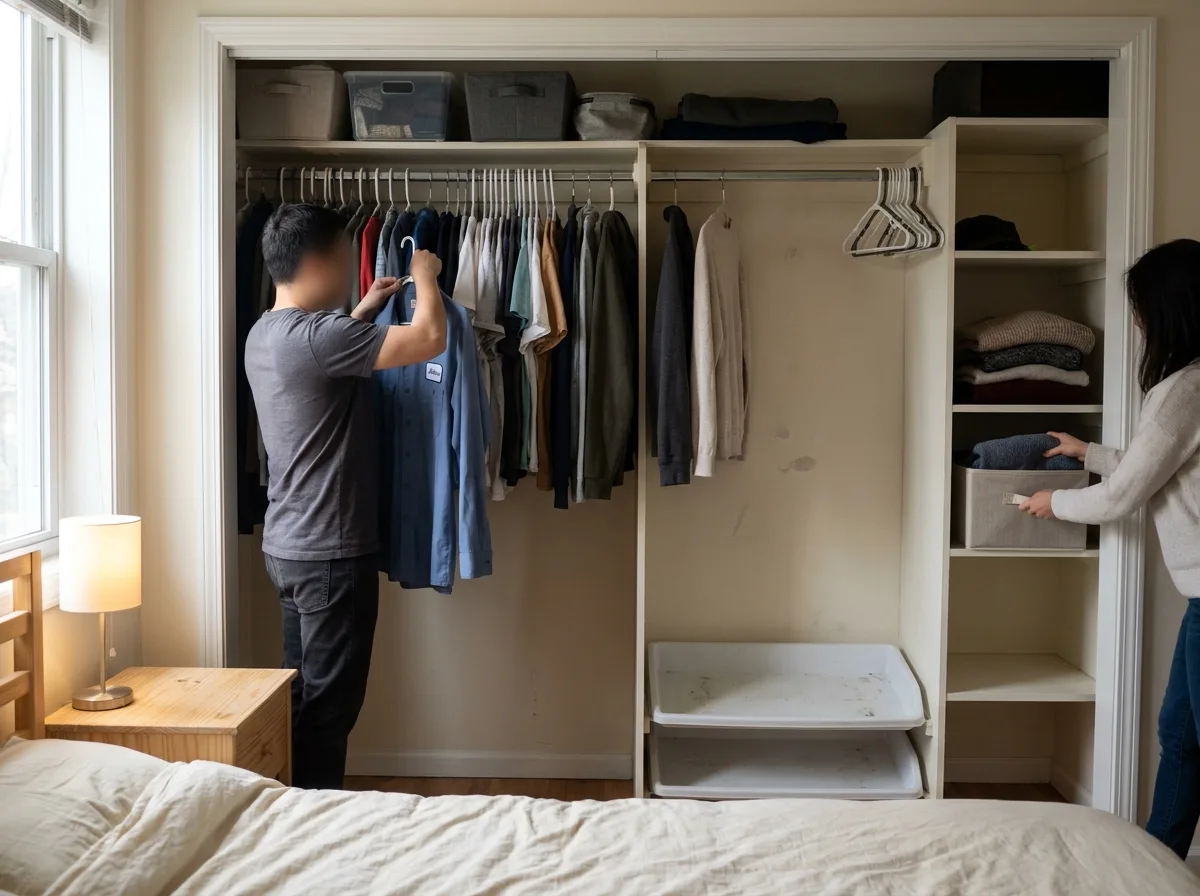
Shared closet organization works best when it is based on storage needs, not an automatic 50/50 split. One person may need more hanging room for work clothes, while the other needs shelves for folded knits, bins for accessories, or floor space for shoes. The fair setup is the one that lets both people open the closet, find what they need, and put things away without shifting the other person's belongings.
Start by looking at the closet as a small shared workspace. Give each person clear, reachable zones. Reserve only a limited section for household items you both agree belong there. Then build in a simple reset routine so the closet does not slowly become storage for everything that lacks another home.
Measure what the closet can actually hold
Before buying organizers or dividing the rod with a visual line, measure the usable space. A reach-in closet can look generous when it is empty, but door swing, deep shelves, and long garments can reduce the space that is practical to use.
Measure and note:
- Interior width, from side wall to side wall
- Rod length and the height from rod to floor
- The height and depth of every shelf
- Clear floor depth in front of the back wall
- Door opening, including whether sliding doors hide one side at a time or hinged doors block nearby furniture
- Any fixed obstacles, such as a return wall, a baseboard, a vent, or an electrical panel
Also check how far you can reach comfortably. An upper shelf may be useful for off-season clothing or spare bedding, but it is not a good home for items either person needs every morning. Likewise, a deep shelf can become a messy pile if it is assigned to daily folded clothes without bins or dividers.
If the closet has sliding doors, plan for partial access. Keep daily items toward the center or on the side that is easiest to reach when each door is open. Do not assign one person a section that is routinely hidden behind the closed door unless their items are rarely used.
Do a two-person clothing and storage audit
Emptying the closet is helpful if you can manage it, but you do not need to turn the bedroom into a weeklong sorting project. Work one category at a time and make an honest count of what needs to live in this closet now.
For each person, look at these groups:
- Hanging clothes, separated into short and long items
- Folded clothes that need shelves or drawers
- Shoes
- Bags, belts, hats, and other accessories
- Seasonal clothes
- Laundry items, luggage, extra linens, or other household goods
As you sort, ask two practical questions: How often is this item used, and does it need to be in this closet at all?
A winter coat in July, a suitcase used twice a year, and spare sheets for a guest bed may be better stored elsewhere if another dry, accessible spot exists. Moving rarely used household items out can create more usable room than adding another hanging organizer.
This step is also where an unequal division often makes sense. If one person has 25 shirts that hang and the other has 10, splitting one rod into two identical lengths creates a problem that containers cannot solve. Give the first person more rod space, then balance the arrangement by giving the other person more shelf space, shoe storage, or a dedicated drawer elsewhere in the room.
Divide the closet by storage need, not equal inches
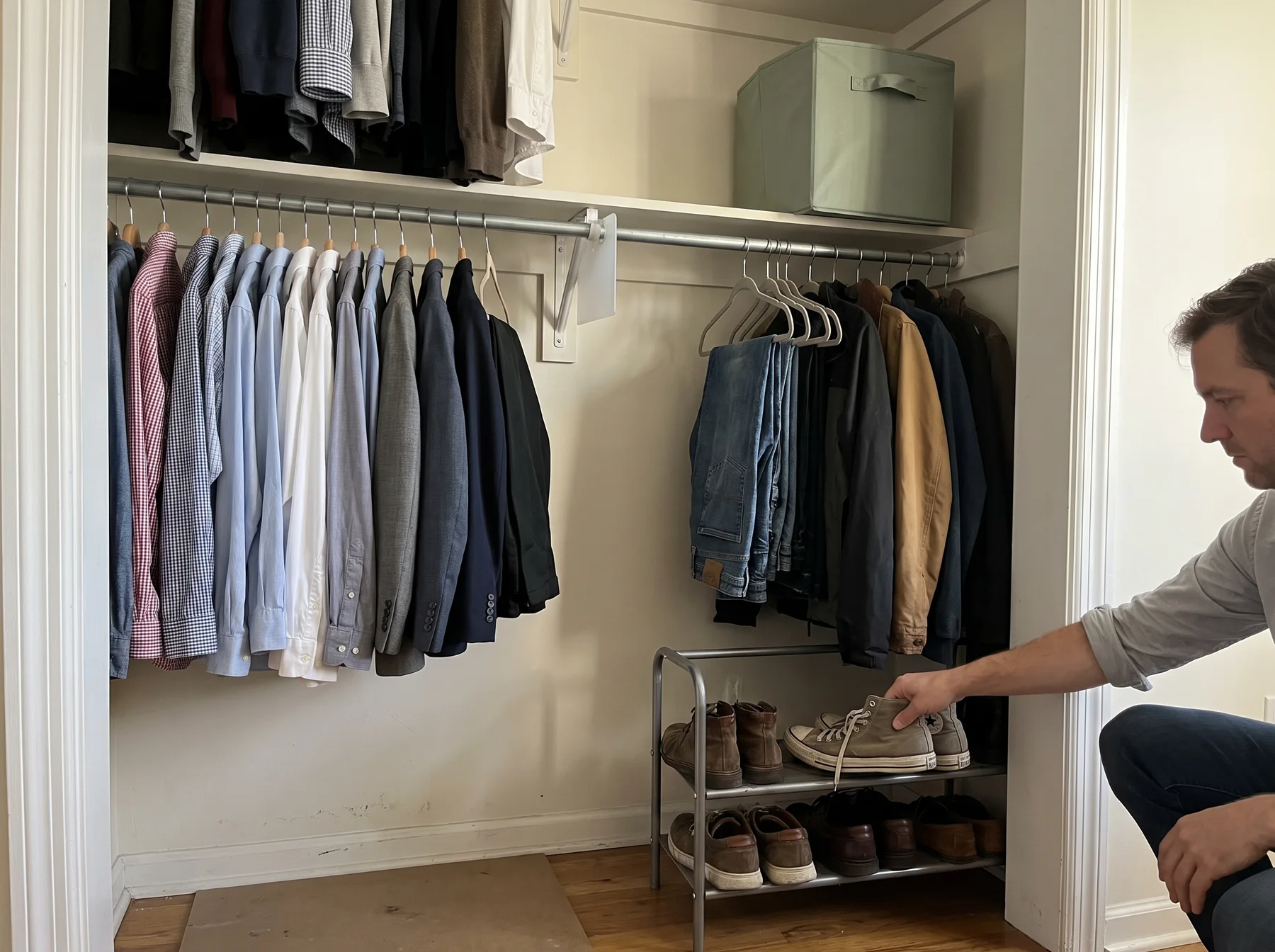
A fair closet does not have to look perfectly symmetrical. It should reflect the types of items each person owns and uses.
Begin by assigning the closet's most convenient areas. The center of the rod, eye-level shelves, and the floor space nearest the opening are high-value locations. Put daily clothing there. Use higher shelves, far corners, and less accessible areas for backup items and seasonal storage.
A simple way to make decisions is to rank each category by frequency.
Daily access
Daily work clothes, school clothes, shoes worn most weeks, and frequently used bags should be within easy reach. If both people dress from the closet at the same time, avoid putting one person's entire daily wardrobe behind the other person's hanging clothes.
Weekly access
Occasion clothes, gym gear, extra shoes, and less-used accessories can go on a side shelf, in a labeled bin, or in a lower section of the closet.
Seasonal or occasional access
Store bulky coats, special-event clothes, extra bedding, and travel items on the upper shelf or outside the closet when possible. Keep these items contained so they do not spread into each person's daily zone.
Use this approach to assign space in a way that is easy to explain. For example, one person might use two-thirds of the rod for hanging clothes, while the other uses one-third of the rod plus a larger shelf lane for folded items. That is a functional division when it matches the actual clothing mix.
Build clear personal zones for shared closet organization
Once you have decided who needs what, make each zone visually obvious. Clear boundaries prevent the quiet drift where clean laundry, extra hangers, and shopping bags land wherever there is an open inch.
Divide the hanging rod
Use the rod in sections rather than mixing all clothing together. You can separate sections with a small gap, a removable rod divider, or different styles of matching hanger labels. The divider should mark a boundary, not take up much room.
Group clothes within each person's section by category or length. Keep long dresses, coats, and longer shirts together so they do not crowd shoes or bins below. Shorter garments can hang above a low shoe rack or shallow basket if there is enough clearance.
If one person needs more rod room, give them the longer section. Do not crowd the rod until hangers cannot slide. A tightly packed rod makes it harder to get dressed and encourages clothes to be shoved back in without sorting.
Assign shelf lanes instead of shared piles
A shelf is easier to share when each person has a defined lane. Divide one shelf left and right, or assign whole shelves by person when the closet layout allows it. Shelf bins can contain folded T-shirts, pajamas, workout clothes, or accessories that would otherwise slump into neighboring stacks.
Choose open-top bins for categories you use often. Use lidded bins only for seasonal items or occasional pieces. A label on the front makes it easier to return things to the right place, especially if the bin is stored above eye level.
Give the floor a job
Closet floors tend to become a catchall for shoes, hampers, bags, and clothing waiting to be dealt with. Assign specific floor zones before that happens.
One workable arrangement is to give each person a narrow shoe area below their rod section, leaving the center floor open for standing and reaching. If the closet is too shallow for two shoe rows, limit the closet to currently worn shoes and store the rest elsewhere. Keeping a clear strip of floor may be more useful than fitting every pair into the closet.
Keep accessories with their owner
Belts, bags, hats, and jewelry often create clutter because they are small and easy to set down anywhere. Give each person one container, hook area, or shelf bin for these items. Avoid creating a general accessory basket. It quickly becomes a mixed pile that neither person wants to sort.
Create one small shared zone, with a defined purpose
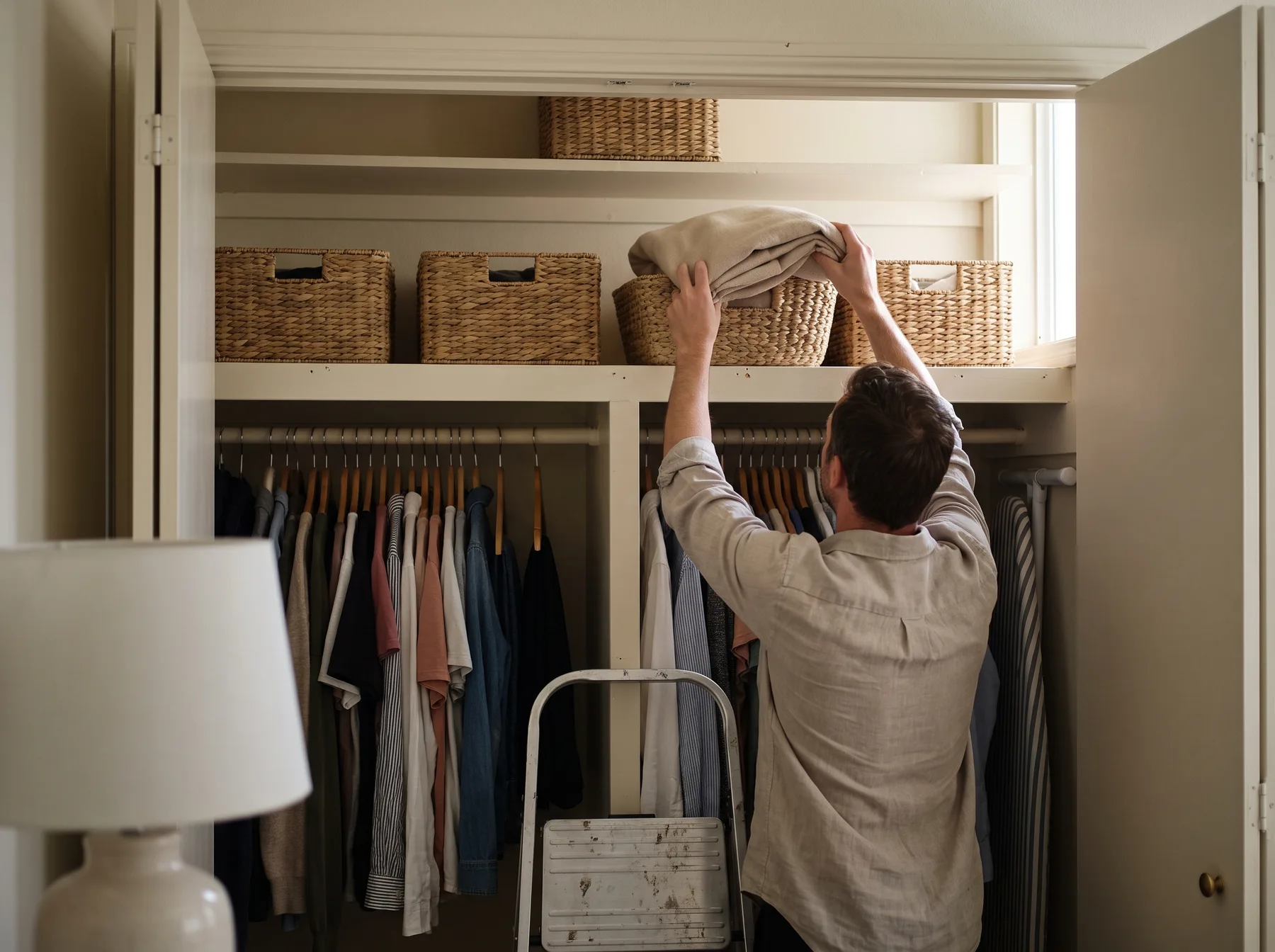
A shared zone can be useful for extra sheets, a blanket, an ironing board, or other agreed household items. It should be small and specific. Without a limit, the shared area becomes a reason to keep overflow in the closet, and both personal zones shrink over time.
Choose one shelf section, one labeled bin group, or a narrow upper-shelf area. Decide what belongs there before filling it. Good shared-zone candidates are items both people use but do not need daily.
Avoid putting these items in the shared zone:
- Unsorted laundry
- Donations waiting indefinitely
- Shopping bags and shipping boxes
- One person's overflow clothes or shoes
- Items that belong in a kitchen, bathroom, entry, or storage area
If an item does not fit in either person's assigned zone or the limited shared zone, it needs a different home or a decision about whether to keep it.
Choose organizers that fit the closet's limits
Organizers should make existing space easier to use. They cannot create enough room for more belongings than the closet can reasonably hold.
Removable hanging shelves can help a person who has more folded clothes than hanging clothes. They work best when the rod is not already full and when the organizer will not block access to clothes beside it. Fabric shelves can sag under heavy stacks, so reserve them for lighter garments and accessories.
Shelf bins help contain small categories on deep shelves. Measure the shelf depth and leave enough space to lift bins out without scraping the closet frame or door. Clear bins can be useful for high shelves, while opaque bins with straightforward labels keep visual clutter lower.
Freestanding drawer units or shoe racks may fit beneath short hanging clothes, but measure the height carefully. Leave room for garments to hang freely above them and for doors to open. A tall unit that forces clothing to bunch at the bottom usually creates more frustration than storage.
Skip organizers that depend on a crowded floor or a door that must remain fully clear. In a small reach-in closet, open access is part of the storage system.
Make resetting the closet quick enough to happen
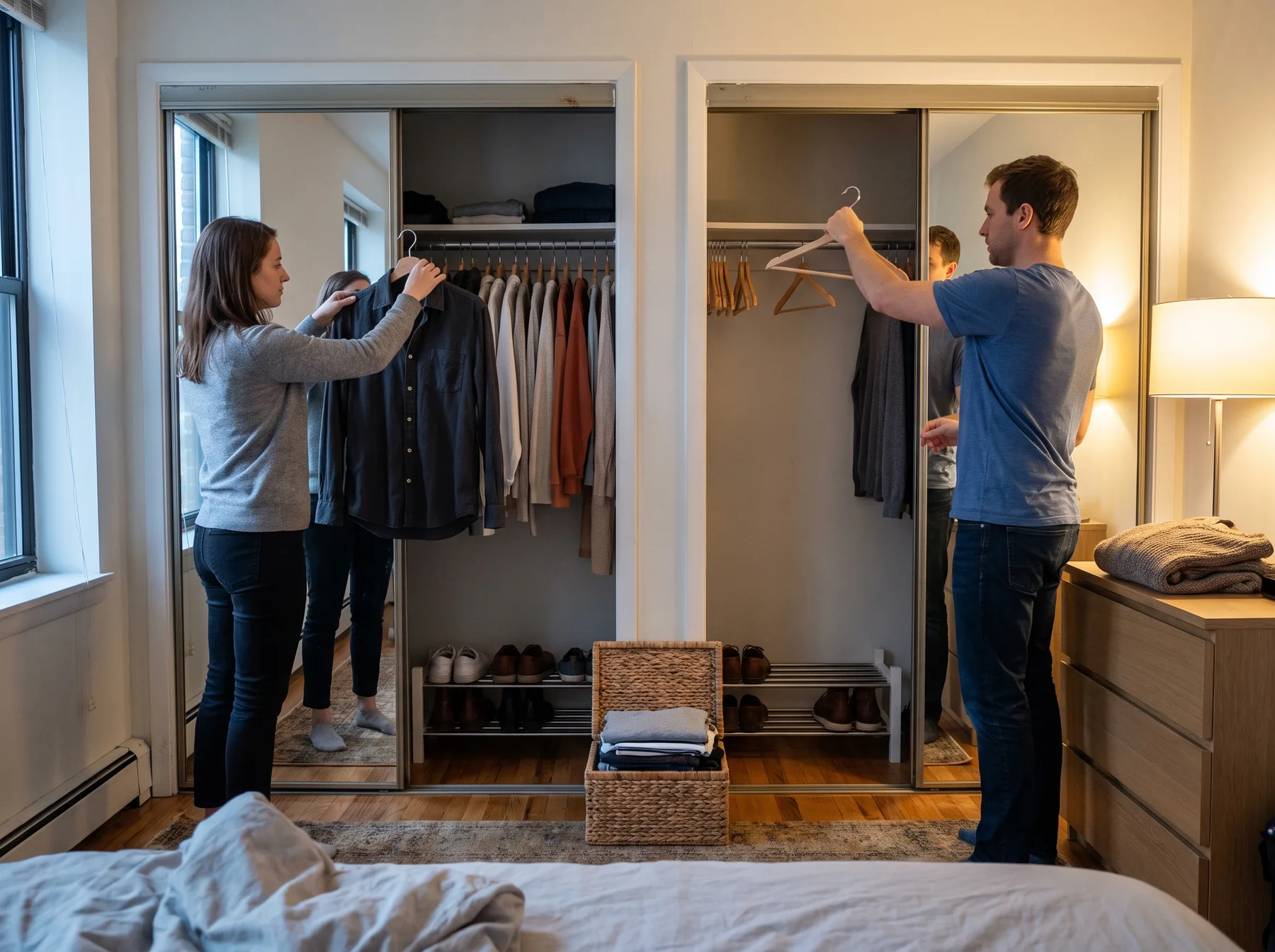
The best setup is one both people can restore in a few minutes. A five-minute weekly reset is usually enough to keep small problems from becoming a full closet overhaul.
Once a week, each person can return loose shoes to their area, rehang clean clothes, remove empty hangers, and take out anything that belongs elsewhere. The goal is not to refold every stack perfectly. It is to keep the rod usable, the floor clear, and zone boundaries visible.
Add a seasonal swap rule, too. When weather changes, each person removes off-season clothes before adding the next season's items. Use the upper shelf, under-bed storage, or another appropriate storage spot for the swapped-out category. This prevents the closet from trying to hold two complete seasonal wardrobes at once.
If one person's zone fills up, do not solve it by taking over the shared area or the other person's section. Revisit the clothing audit. The answer may be fewer duplicate items, a better location for seasonal pieces, or an added drawer outside the closet.
When one small closet is not enough
Sometimes a fair plan shows that the closet cannot store everything for two people. That is useful information, not a failure of organization.
Consider moving a single category outside the closet rather than scattering every category around the room. A dresser can hold folded clothing, a bed with accessible under-bed storage can hold seasonal items, or an entry-area solution can handle frequently worn shoes and coats. Keep the closet focused on the items that benefit most from hanging space and quick access.
A small closet shared by two people will stay more functional when both people have a defined place for their daily belongings and an agreed limit on what the closet is expected to contain. The goal is not identical space. It is a setup that is clear, reachable, and easy to maintain.
Join the conversation
0 comments
Leave a comment
Your email address will not be published. Comments are reviewed before appearing.