
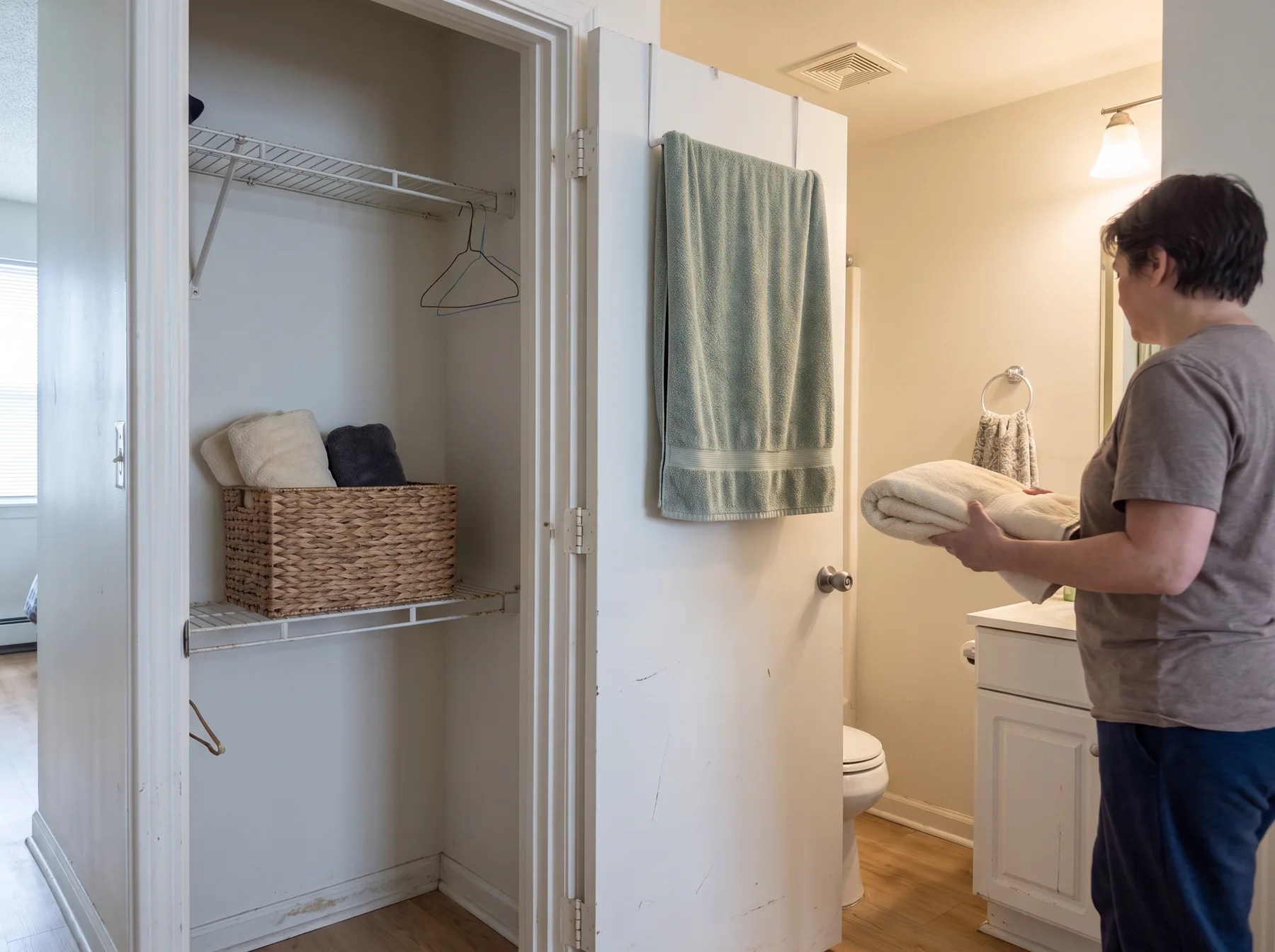
The simplest answer to how to store towels without a linen closet is to stop asking one small bathroom to hold every towel you own. Keep the towels currently in use open to dry in the bathroom, keep a small set of clean backups nearby, and store extra linens in the driest practical space, such as a bedroom closet or laundry area.
This approach is especially useful in rentals with a narrow bathroom, a compact vanity, no built-in cabinet storage, or a door that leaves little wall space. Towels take up more room than they seem to, and damp towels need airflow. Giving each type of towel a separate job prevents a cluttered bathroom and helps clean linens stay fresh.
Start by separating your towels by job
Before choosing a storage spot, sort towels into groups. A bath towel that is still drying needs a very different home from a folded backup towel.
Damp everyday bath towels
These towels need to hang fully open after use. A hook can work for a hand towel, but a bath towel dries more reliably when spread across a bar, over-the-door rack, or another holder that lets air reach more of the fabric.
Keep only the number of towels in active use in the bathroom. In a one-person apartment, that may be one bath towel and one hand towel. A couple may need two bath towels and shared hand towels. The goal is to make drying space available, not to create a stack of damp fabric.
Clean bath-towel backups
Clean, fully dry bath towels can live in the bathroom if there is a protected, dry spot. If there is not, store them in a bedroom closet, hall closet, laundry nook, or another nearby cabinet.
A small bathroom does not need a full household supply. Keeping one or two clean bath towels near the bathroom is usually enough for day-to-day swaps.
Hand towels and washcloths
Hand towels are small enough to keep close to the sink, provided they are not squeezed into a damp drawer or piled on the counter. Washcloths are easy to contain in a shallow bin, small drawer, or labeled basket outside the bathroom.
Guest towels and occasional-use linens
Guest towels, beach towels, extra washcloths, and seasonal items are often the first things to move out of the bathroom. Store them with bedding or laundry supplies in the driest available zone.
How to choose the right towel storage location
Start with the space you actually have, then match it to the towel type. Measure the usable area before adding any rack, shelf, or basket. Check the door swing, drawer and cabinet access, toilet clearance, and whether the placement will make cleaning harder.
For renters, also check the lease and building rules before making changes. Removable hooks, adhesives, and over-the-door organizers can still mark paint, wood veneer, or other finishes, particularly if they are overloaded or removed incorrectly.
Use the back of the bathroom door for active towels
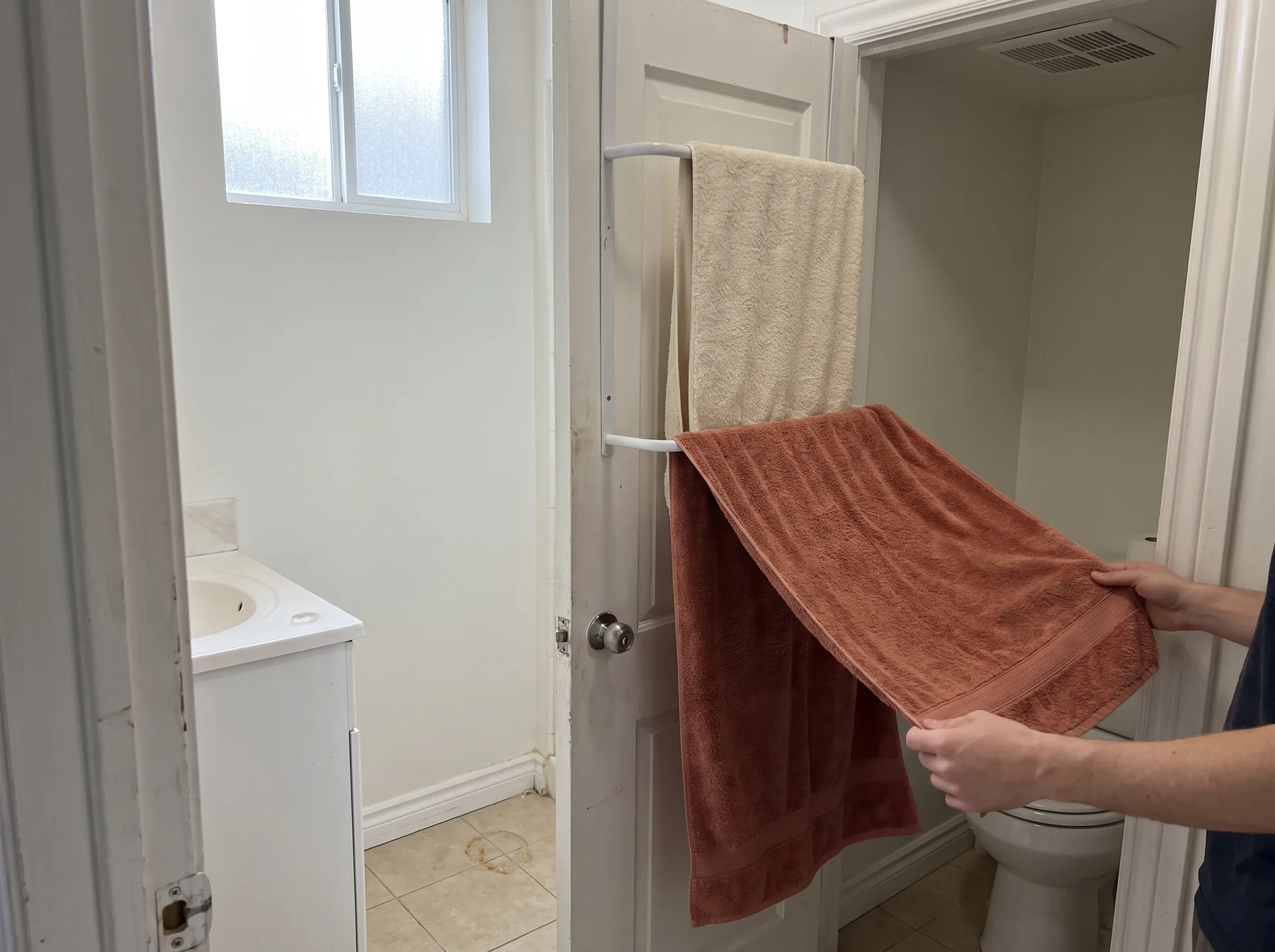
The back of the bathroom door is often the most useful place to dry everyday towels in a small apartment. It uses vertical space that would otherwise sit empty and does not take up floor area around the vanity or toilet.
An over-the-door towel rack is typically more practical for bath towels than several individual hooks because it gives each towel more room to dry. A few separate hooks can be useful for hand towels, robes, or a washcloth that needs to air out.
Check door clearance first
Open and close the door fully before committing to this setup. The organizer should not hit the door frame, wall, towel bar, toilet, or vanity. It should not interfere with the latch or prevent the door from closing securely.
In especially tight bathrooms, account for the thickness of a hanging towel, not just the rack itself. A folded bath towel can project several inches into the room. If that blocks the toilet, makes it difficult to enter, or catches on the vanity, choose another zone.
Keep the door usable
Avoid loading every hook with heavy wet towels. Besides stressing the organizer and door, this can make the door awkward to operate. Leave room between towels whenever possible so they can dry.
If the bathroom has weak ventilation, run the exhaust fan during and after bathing if it is available and working. Do not cover vents or use the door storage in a way that obstructs ventilation.
Use the area above the toilet for clean backup towels
Open wall space above a toilet can hold a small reserve of clean, folded towels. This location works best for fully dry backups, not damp towels that need airflow.
A shallow shelf or compact freestanding over-toilet unit can make use of vertical space, but it must be stable and should not crowd the toilet area. Keep the setup simple enough that you can clean around it easily.
Protect clean towels from bathroom moisture
The area above a toilet is not ideal for a large open stack of linens. Store only a modest amount, place towels in a lidded or well-contained container if splash exposure is a concern, and keep them far enough back that they cannot fall into the toilet.
A better setup may be a small basket with two neatly folded bath towels, rather than a tall pile. Roll towels only if that makes the available depth easier to use. Folding towels flat often makes it easier to see and remove the bottom towel without disturbing everything else.
Be cautious with wall-mounted storage
Do not assume a shelf is safe because it is small. Follow the manufacturer’s instructions for mounting method, surface type, and weight limit. Adhesive systems may not suit humid bathrooms, textured walls, painted surfaces in poor condition, or heavy loads.
Avoid placing tall, unstable furniture where it could tip or where it makes the toilet difficult to access. Never block an outlet, vent, or access panel.
Create an under-sink zone for a small towel backup
A vanity cabinet can work well for a few clean towels, particularly in a bathroom with no other storage. The key is to organize around the plumbing rather than trying to force in a large stack.
Use the upper or side area of the cabinet for one or two folded bath towels, plus a few washcloths. A narrow bin can keep washcloths from sliding behind pipes. If the cabinet has a shelf, place towels where they will not be pressed against plumbing connections.
Store only fully dry towels under the sink
Under-sink cabinets can be humid, especially after showers. Do not put damp towels there, and do not store clean towels in a cabinet with a leak, persistent odor, or visible moisture.
Check the cabinet periodically for drips and leave enough space to reach the shutoff valves if they are present. Towels should never block plumbing access or make it harder to notice a leak.
Avoid cramming the cabinet
A packed under-sink cabinet is difficult to keep clean and can trap dampness. If towels have to be shoved around pipes or pushed against cleaning supplies, move the bulk supply elsewhere.
Keep cleaning products separate from linens. A small tray or bin for bathroom supplies can define the boundary and protect towels from spills.
Make a mini linen zone outside the bathroom
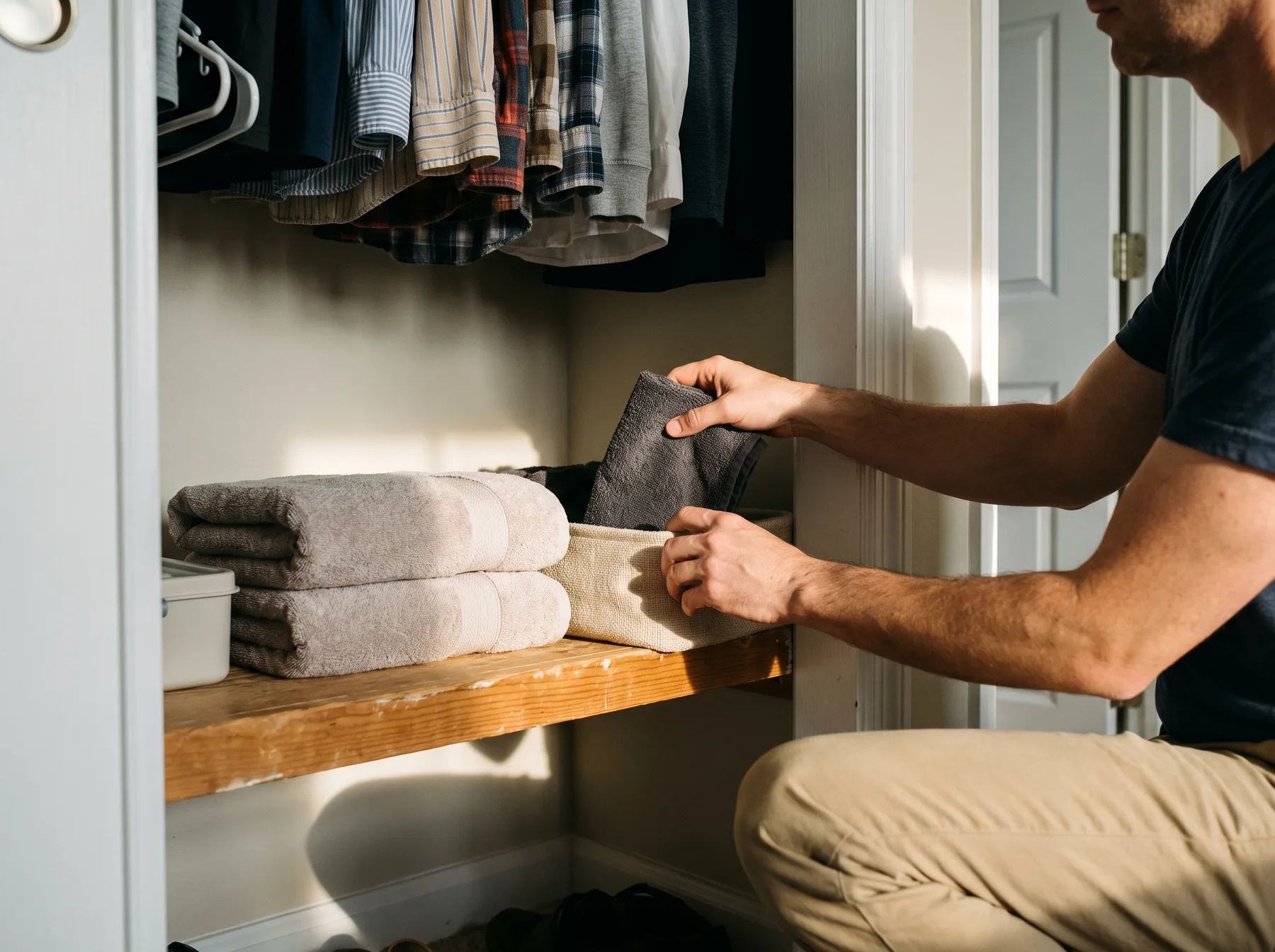
When the bathroom has no practical place for clean towels, use the closest dry storage space. This is often the most functional answer for renters trying to store towels without a linen closet.
A bedroom closet, entry closet, laundry area, or even a portion of a wardrobe can become a mini linen zone. The bathroom then holds only active towels and perhaps one clean backup.
In a bedroom closet
Use one shelf, a fabric bin, or a shallow basket for towels. Place it where it is easy to reach without moving shoes, bulky clothing, or storage boxes. Towels stored high on a closet shelf should be contained so they do not topple when one is removed.
If closet shelves are deep, keep bath towels at the front and less-used guest towels behind them. This prevents everyday items from disappearing into the back of the closet.
In an entry or utility closet
An entry closet can work if it stays dry and does not also function as a crowded coat-and-shoe catchall. Keep towels above floor level and away from wet umbrellas, pet gear, or outdoor footwear.
In a laundry zone
A nearby laundry closet or utility nook is convenient because clean towels can go directly from dryer to storage. Choose a shelf or closed bin away from detergent drips and make sure towels remain dry before folding them.
If your laundry equipment is inside a bathroom, do not store a large reserve of towels beside the machines if the area becomes hot, damp, or difficult to access.
A realistic towel rotation for a small apartment
The right number depends on laundry access, household size, and how quickly towels dry. Still, keeping a limited rotation makes storage easier and reduces the pile that builds up in a small bathroom.
| Household | Bath towels in active rotation | Clean backups nearby | Bulk extras stored elsewhere | |---|---:|---:|---:| | One person | 1 to 2 | 1 to 2 | 1 to 2, if useful | | Two adults | 2 to 4 | 2 | A small extra set | | Shared apartment | One active towel per person | 1 to 2 shared backups | Individual extras in each bedroom |
These are starting points, not rules. Someone who uses a laundromat once a week may want more backups. Someone with in-unit laundry may be comfortable with fewer. The useful limit is the amount you can store cleanly, keep dry, and rotate without losing track of what needs washing.
For shared rentals, assigning each person a towel color or a labeled shelf can reduce confusion. Keep personal towel supplies in bedrooms if the bathroom is too compact for everyone’s extras.
Keep towels fresh in a small storage setup
Towels must be fully dry before they are folded into a cabinet, basket, or closet. Even a slightly damp towel can leave a closed storage space smelling musty.
A few habits help:
- Hang used bath towels open rather than folding them over a narrow hook.
- Leave space between clean towel stacks and the back wall of a humid bathroom cabinet.
- Wash towels regularly and dry them completely according to their care labels.
- Wipe down damp shelves or bins before returning clean towels.
- Use washable bins or baskets in areas that collect dust, such as closet shelves.
Avoid heavily scented products as a substitute for drying and cleaning. Fresh storage starts with dry fabric and a dry storage zone.
Common towel-storage mistakes in rentals
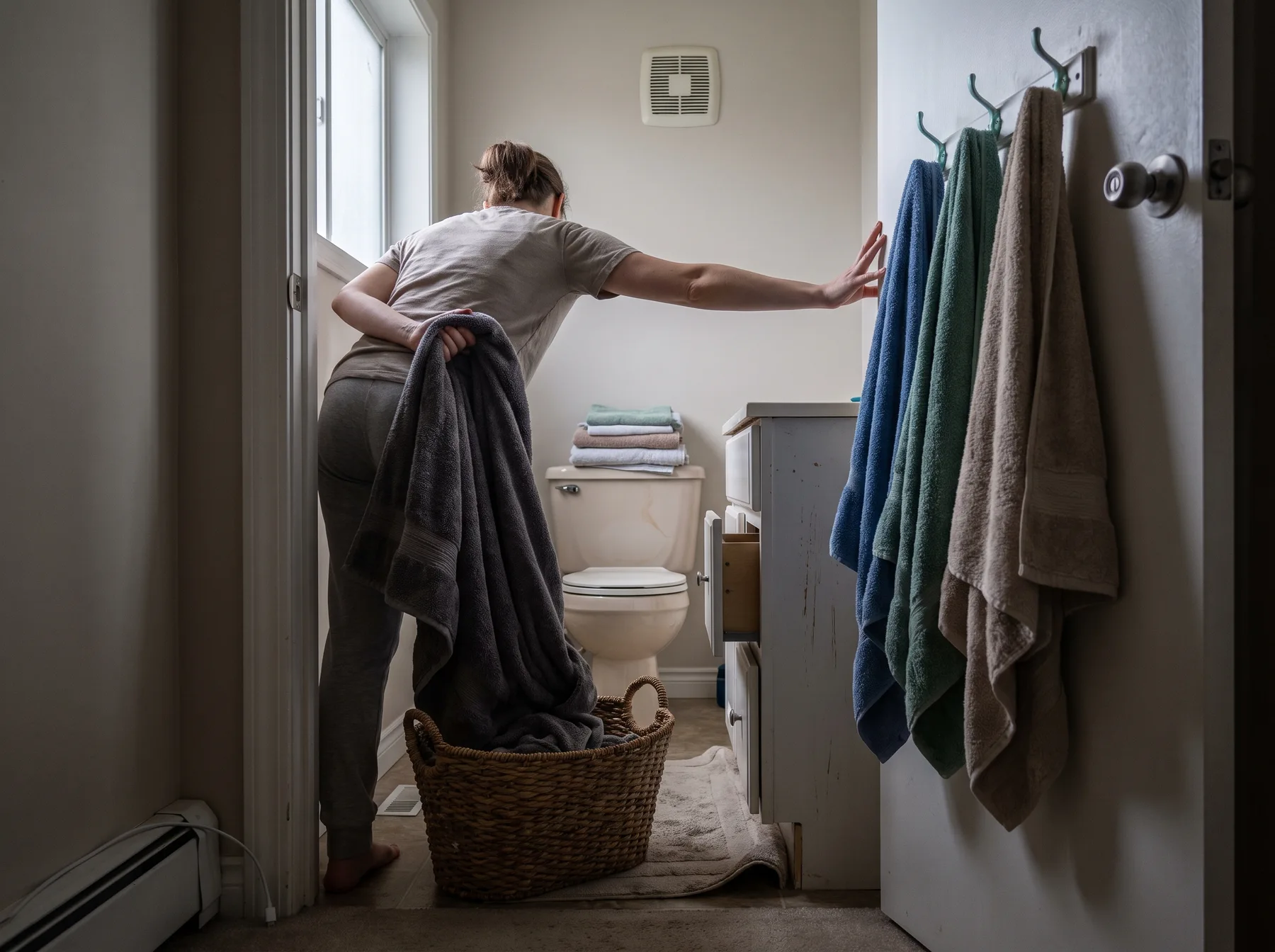
Putting damp towels in baskets
A basket may look tidy, but it is poor drying storage for a wet bath towel. Folded or bunched fabric holds moisture and can develop odors. Baskets are better for clean, dry washcloths or folded backups.
Treating the bathroom as the only towel location
A bathroom without cabinets does not need to hold your entire towel collection. Moving bulk linens to a closet or laundry zone is often the difference between a workable bathroom and a crowded one.
Blocking the door swing
Over-the-door storage needs a clearance check every time. Do not create a setup that keeps the door from latching, scrapes the wall, or narrows the path into the bathroom.
Overloading removable hooks or racks
Wet towels are heavier than dry ones. Follow stated installation and weight guidance, especially with adhesive hooks in humid spaces. If a hook is pulling away from the wall or the surface is damaged, stop using it and choose a lighter load or a different storage method.
Storing clean towels beside leaks or damp laundry
Towels absorb moisture and odors easily. Keep clean linens away from plumbing leaks, wet clothing, and damp floors. A dry closet shelf is often a better choice than a crowded bathroom cabinet.
Build a towel system that fits your apartment
The most useful towel storage plan has two zones: an airy place for towels that are drying and a dry, contained place for clean backups. In a small rental, those zones do not have to be in the same room.
Use the bathroom door or another open holder for active towels. Keep a small reserve above the toilet or under the sink only if those areas stay dry and accessible. Then place the larger supply in a bedroom closet, entry closet, or laundry space where it will remain clean and easy to restock.
Explore the topics covered by Rentery Home: Bathroom & Laundry, Closets & Bedrooms, and Renter-Friendly Upgrades.
Join the conversation
0 comments
Leave a comment
Your email address will not be published. Comments are reviewed before appearing.