
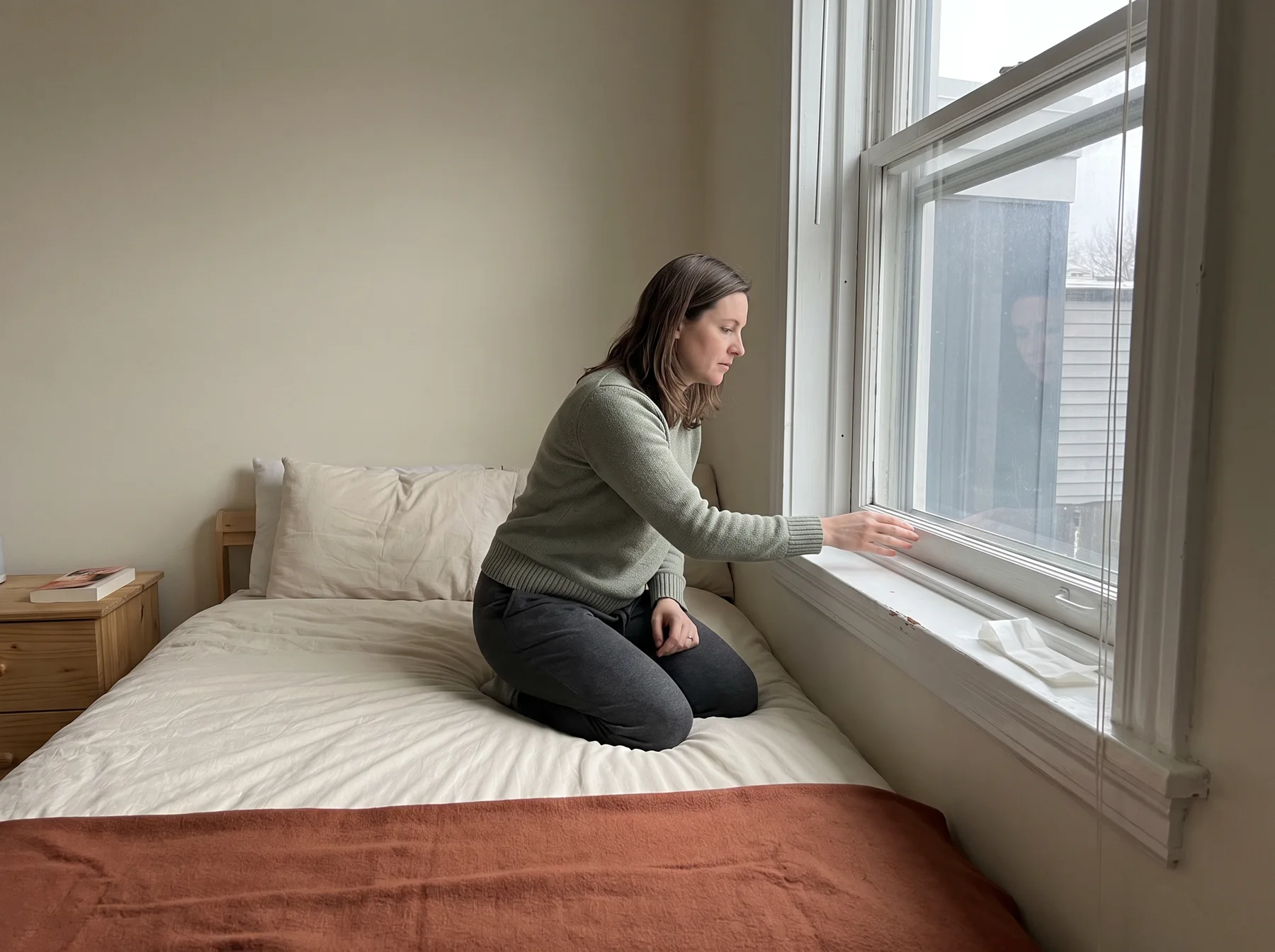
A cold spot by an apartment window does not always mean the window has a gap. Sometimes outside air is slipping past a worn seal or poorly closed sash. Other times, the glass itself is cold enough to chill the nearby air, which then drops toward the floor and makes a bed, desk, or sofa feel uncomfortable.
Knowing which problem you have is the first step in how to stop drafts from apartment windows without replacing them. Start with simple checks, use removable comfort measures where they make sense, and document problems that need maintenance rather than a DIY workaround.
Start with the symptom you notice
Pay attention to when and where the discomfort happens. That detail helps separate a true air leak from a cold-window problem.
A likely air leak often feels like a focused stream of moving air near the window frame, the meeting point between two window sections, or a closed but unlatched sash. It may be more noticeable during windy weather. You might also hear rattling, see daylight at an edge, or find that the window shifts slightly in its frame.
Cold glass creates a different feeling. The area near the window may feel chilly, especially at floor level, but you may not be able to find one specific gap. The room can feel cold even when the window is fully closed and locked. Single-pane glass and older insulated windows can make this effect more noticeable, but you do not need to identify the window type to improve the room's comfort.
Condensation is another useful clue, but it does not prove there is an air leak. Water droplets on the interior glass can form when warm indoor air meets a cold surface. Repeated moisture around the frame, peeling paint, staining, or wet drywall needs more attention because it may point to a building maintenance issue.
How to stop drafts from apartment windows: check for a real air leak
Do these checks with the window closed and locked. Do not dismantle the window, remove stops, or take apart hardware in a rental.
Check the latch and sash alignment
First, open and close the window normally. Make sure the lower sash is fully seated in the frame, then engage the lock. On many windows, the lock does more than secure the window. It also pulls the sash tighter against its weather seal.
Look along the edges where the moving sash meets the frame. A visible, uneven gap is worth documenting. So is a window that will not stay shut, will not lock, or needs force to close. Those are repair concerns, not just comfort issues.
Look for air movement without using a flame
On a windy day, hold a lightweight strip of tissue near, but not inside, the edges of the closed window. Check the top, bottom, sides, and center meeting rail. Movement in one small location can help identify a gap.
Do not use a candle, lighter, incense, or smoke to test for drafts. An open flame near curtains, blinds, papers, or bedding is unnecessary and creates a preventable fire risk.
Compare the frame with the glass
Hold your hand a few inches from the glass, then near the frame and sash edges. The glass may feel cold across a broad area without producing a distinct moving-air sensation. That points more toward surface chill than a hole around the window.
Also check the floor below the window. Cold air that falls from a chilly pane often collects there. A desk chair, reading chair, or bed placed in that path may feel far colder than the rest of the room.
Check the window's role before making changes
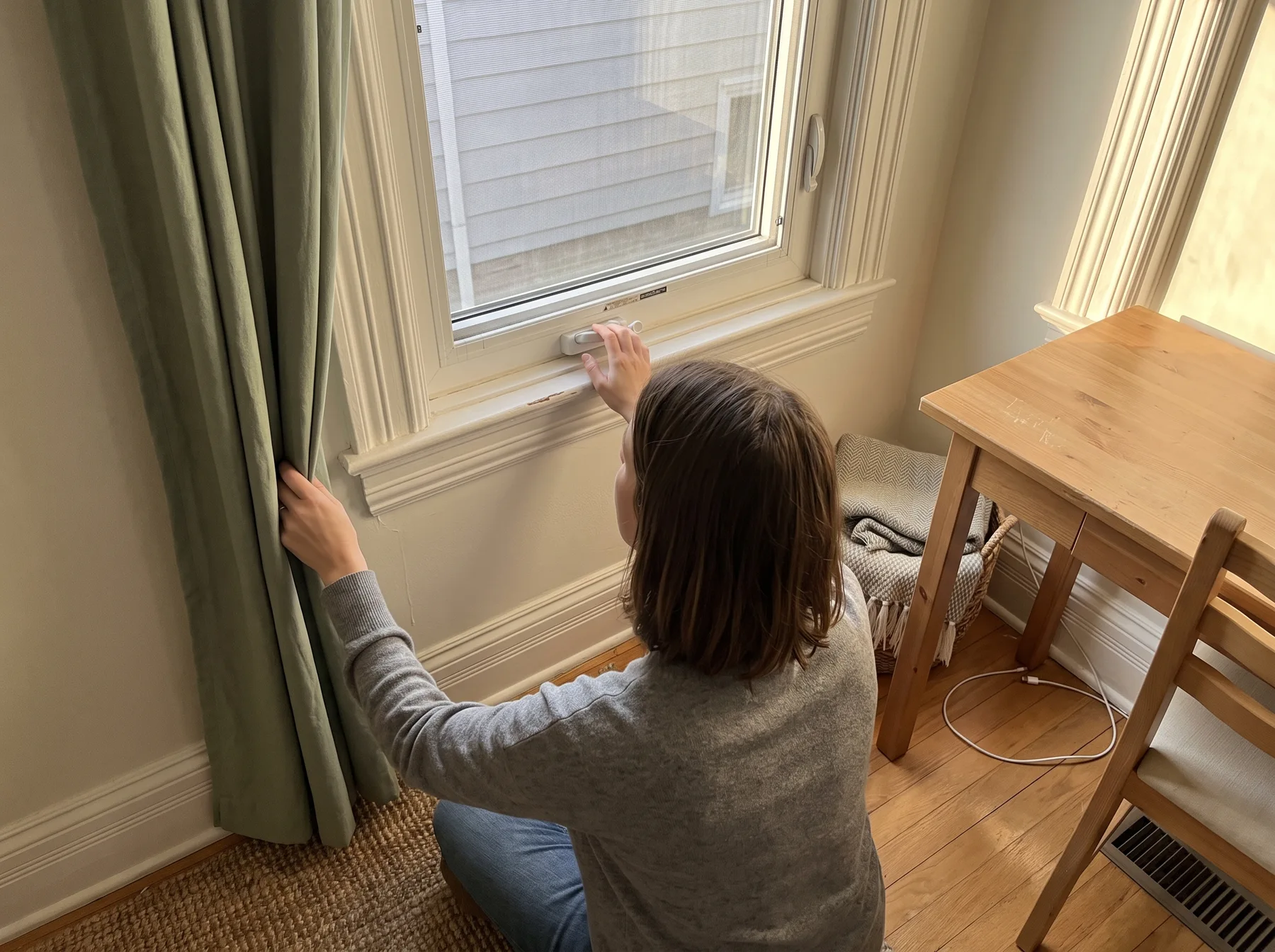
Many apartments have at least one window that must remain readily usable for emergency escape. Bedroom windows are especially important to assess. Do not cover, seal, block, or arrange furniture in a way that prevents a required window from opening.
Keep access to window locks and handles clear. Avoid placing a bed, bookcase, or desk where it blocks the window opening or makes it difficult to get to in an emergency. If you are unsure whether a particular window is an egress window, ask property management rather than guessing.
Some buildings also rely on operable windows for ventilation. If your lease, building rules, or management instructions limit window films, adhesives, or alterations, follow those requirements. Removable does not automatically mean damage-free or approved.
If a window has a cracked pane, broken lock, damaged frame, missing screen, or is difficult to open or close safely, report it before adding temporary materials. A temporary fix should not hide a condition that needs repair.
Try low-commitment ways to make the room more comfortable
When the main issue is cold glass rather than a clear gap, room setup and window coverings can make a meaningful difference in how the space feels.
Close and lock the window correctly
This sounds basic, but it is worth checking after cleaning, moving curtains, or opening the window for ventilation. Confirm that the sash is fully shut and the lock is engaged. If it will not align or latch without pushing hard, take a photo and include that in a maintenance request.
Do not tape a window shut if it needs to remain operable for egress or ventilation. Tape can also pull paint from trim and leave adhesive residue.
Use curtains and blinds for the season
Close curtains or blinds at night and during the coldest part of the day to reduce the direct chill from the glass. Open them when sunlight is useful for the room, then close them again once the window area starts feeling cold.
Keep fabric clear of heaters, radiators, baseboard units, and heat registers. Curtains that cover a heat source can create a safety issue and may make the room heat unevenly.
Move furniture out of the cold-air path
Even a small shift can help. Pull a bed, chair, or desk a few inches away from a cold window wall when space allows. Moving seating away from the floor directly below the glass can be especially useful, since cooled air tends to settle there.
If rearranging a bedroom creates a storage squeeze, a more efficient closet setup may free up enough floor area to make the layout work. This guide to organizing a small closet for two people has practical ideas for assigning limited closet space without adding bulky furniture to the room.
A rug can make the floor near a window feel less harsh underfoot, though it will not seal an air leak. Think of it as a comfort measure, not a window repair.
Use removable weatherstripping only for a confirmed gap
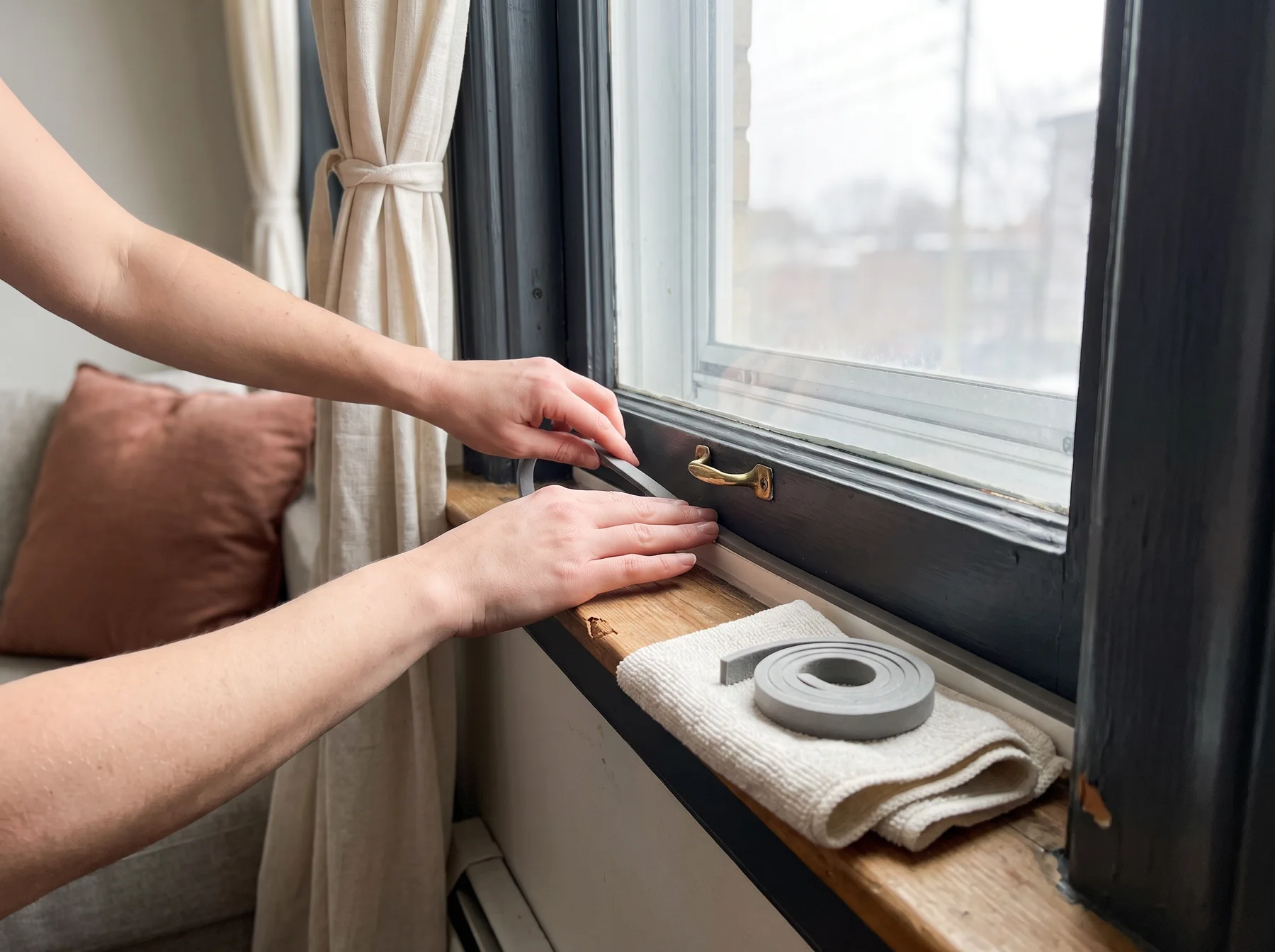
Weatherstripping is most useful when you have identified a narrow gap around a closed, operable sash. It is not a solution for cold glass, failed insulated glazing, warped framing, or water intrusion.
Choose a removable product intended for windows, and read its package directions before applying it. The material must not prevent the window from closing fully, locking, or opening when needed. Avoid building up layers of foam or adhesive until the sash is hard to operate.
Before applying anything, clean and dry the surface according to the product instructions. Test a short section in an inconspicuous spot if your lease permits it. Painted trim, aged finishes, and some vinyl surfaces can be damaged when adhesive materials are removed.
Use weatherstripping at the contact point where air enters, not over drainage openings, tracks, lock hardware, or the entire window frame. If you cannot identify a sensible placement without interfering with operation, stop and request maintenance instead.
When insulating window film can help, and when to skip it
Clear insulating window film can reduce the cold feeling from a window by creating an additional air layer on the room side. It may be a reasonable seasonal measure for a window that is not needed for everyday opening and is allowed by your lease or building rules.
It is not appropriate for every window. Skip film if it would make an emergency exit less readily operable, if you regularly need the window for ventilation, or if management does not permit it. Do not assume that cutting a slit into the film preserves safe egress. A covered window can still be harder to operate quickly, especially in low light or during stress.
Follow the film manufacturer's instructions for compatible surfaces and removal. Do not use it to conceal cracked glass, water damage, or a failed lock. Those problems belong in a maintenance request.
If condensation increases behind the film, remove the film if it is safe to do so and notify management if moisture is recurring. Trapped moisture near trim or drywall is not a problem to ignore.
Make a maintenance request that gives management useful details
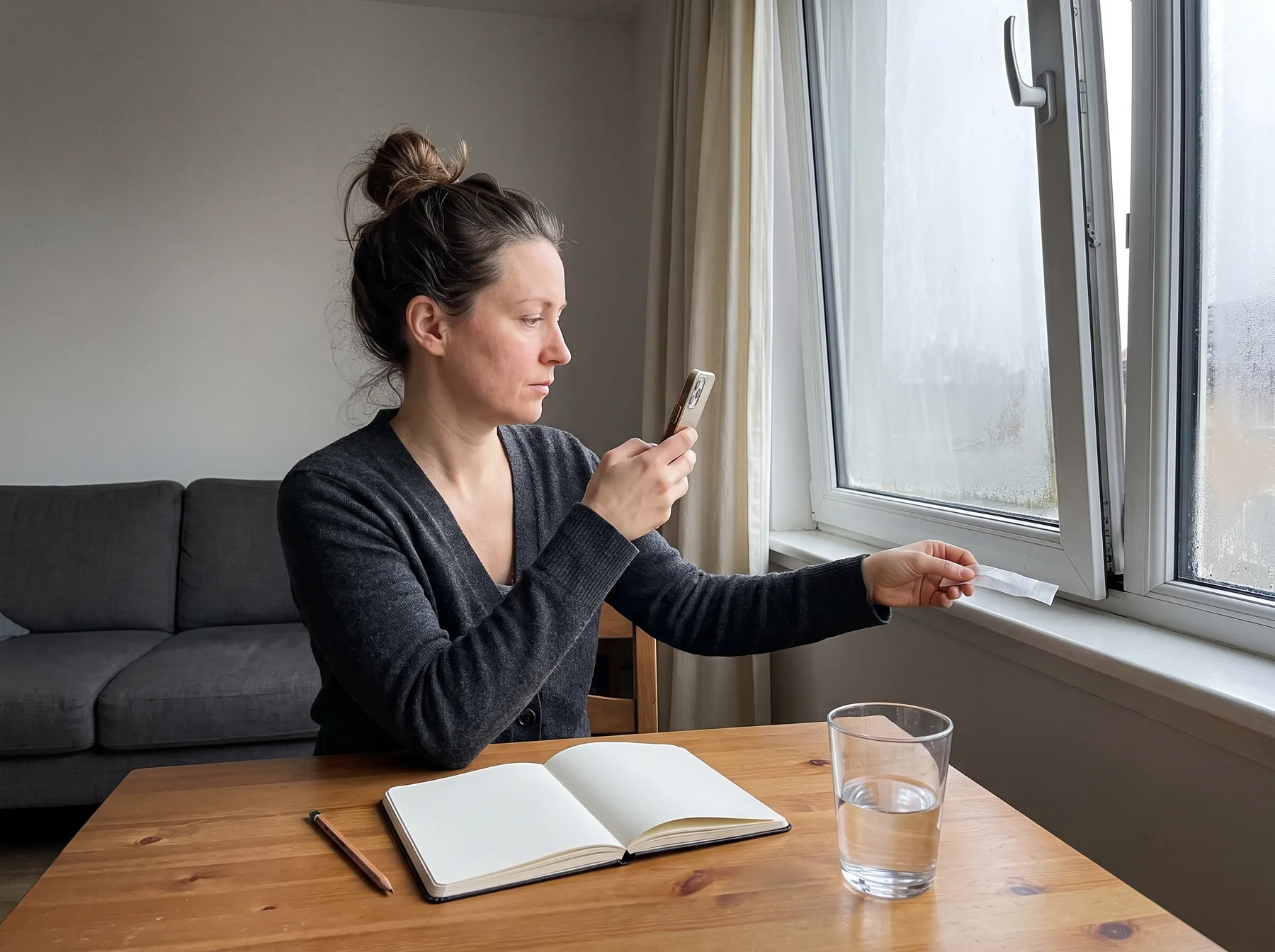
A clear request is more likely to explain the actual issue than a general note that the room is cold. Take photos and write down what you observe before adding temporary measures.
Include:
- The room and exact window location.
- Whether the issue is a noticeable air stream, broad cold glass, condensation, water, rattling, or trouble latching.
- When it happens, such as during wind, rain, or overnight cold.
- Photos of visible gaps, damaged seals, moisture, peeling paint, cracked glass, or broken hardware.
- Whether the window closes, locks, and opens normally.
- Any basic steps you tried, such as fully latching the window or moving furniture away from the area.
Keep your message factual. For example: “The bedroom window has a visible gap at the lower right corner when it is closed and locked. I can feel air movement there on windy days, and the latch is difficult to engage.” This gives maintenance staff a practical starting point without asking you to diagnose the building problem yourself.
Contact management promptly for these window problems
Some issues should not wait for seasonal comfort measures. Contact management promptly if you notice water entering around the window, persistent dampness, mold or mildew, cracked or broken glass, a damaged frame, or a lock that does not work.
Also report a window that will not close securely, will not open safely when it should, or has a large visible gap. Do not force stuck hardware or try to repair springs, balances, glass, or frame components yourself. Those repairs can affect security, egress, and the window's proper operation.
Temporary steps such as closing curtains or shifting furniture can make a cold corner easier to use while you wait for a response. They should not replace a repair request when the window is leaking water, unsafe, or unable to close and lock.

Join the conversation
0 comments
Leave a comment
Your email address will not be published. Comments are reviewed before appearing.